
Electric Garage Heater: Sizing, Wiring, Costs and Safety

An electric garage heater is the simplest way to make a garage comfortable for winter projects. It needs no fuel deliveries, no gas line and no flue. Once an electrician wires it in, you set the thermostat and the garage warms up. For many weekend workshops and home gyms, that simplicity is exactly what owners want.
Last reviewed and updated: October 2, 2026. Written by Jeremy Jarvis.
Key takeaways
- An electric garage heater needs no fuel or venting, which makes it the simplest permanent way to heat a garage.
- HomeGuide puts electric garage heaters at $400 to $1,200 installed and notes they suit smaller spaces needing occasional heat.
- Size the heater to the garage’s heat loss, then have an electrician confirm the circuit, breaker and wire size.
- Keep anything that can burn at least 3 feet away and never leave portable heaters running unattended.
This guide explains the main types of electric garage heater, how watts, BTUs and amps relate, how to size a heater and what the circuit needs. It also covers installation costs, mounting, thermostats, running costs and fire safety. To estimate the heat your garage needs, use the free Garage Heater Size Calculator.
Why choose an electric garage heater
Electric heat has several clear advantages in a garage. First, it produces no combustion gases, so there is no flue to install and no carbon monoxide from the heater itself. Second, installation is usually simpler than for gas, since it needs only a suitable circuit. Third, electric heaters are quiet, compact and easy to control with a thermostat.
The trade-off is running cost. HomeGuide notes that electric heaters are best for smaller spaces needing occasional heat, as they can be more expensive to operate. In other words, an electric garage heater shines when you heat a modest, insulated garage for a few hours at a time. For large, drafty garages heated all day, a gas heater or a heat pump may cost less to run. Our garage heater guide compares all the fuel options.
Types of electric garage heater
Electric garage heaters come in a few main styles. Each delivers heat differently, which affects how comfortable the garage feels.

Free download: The Garage Makeover Planner
Our 12-page printable planner: garage profile, measurements and layout grid, declutter tracker, zone plan, floor chooser, door safety checks, budget worksheet and order of work.
| Type | How it heats | Best for | Notes |
|---|---|---|---|
| Fan-forced unit heater | Heats air and blows it around the garage | Warming the whole space | Usually ceiling or wall mounted; often 240 volts |
| Infrared or radiant panel | Warms people and objects directly | Drafty garages, workbench zones | Quiet; heat is directional |
| Wall-mounted convection heater | Warms air by natural circulation | Small, well-sealed garages | Silent but slower to heat |
| Portable ceramic or oil-filled | Small fan or radiator heat | Spot heating for short periods | Plug-in; higher fire risk if misused |
For most garages, a ceiling-mounted fan-forced unit heater is the workhorse. It moves warm air across the whole space and is out of the way. Meanwhile, infrared panels are excellent above a workbench, especially where the garage door opens often.
Watts, BTU and amps explained
Electric heaters are rated in watts, while heat loss is often expressed in BTU per hour. They describe the same thing in different units. A higher wattage heater delivers more heat. The Garage Heater Size Calculator converts between them so you do not have to.
Amperage is where electrical planning starts. The current a heater draws equals its wattage divided by the voltage. For that reason, a heater running on 240 volts draws about half the current of the same wattage at 120 volts. That is why larger heaters almost always run on 240-volt circuits: the lower current allows practical wire and breaker sizes.
Your electrician will use the heater’s rating and the maker’s instructions to choose the breaker and wire size. Never guess at these, because an undersized circuit can overheat.
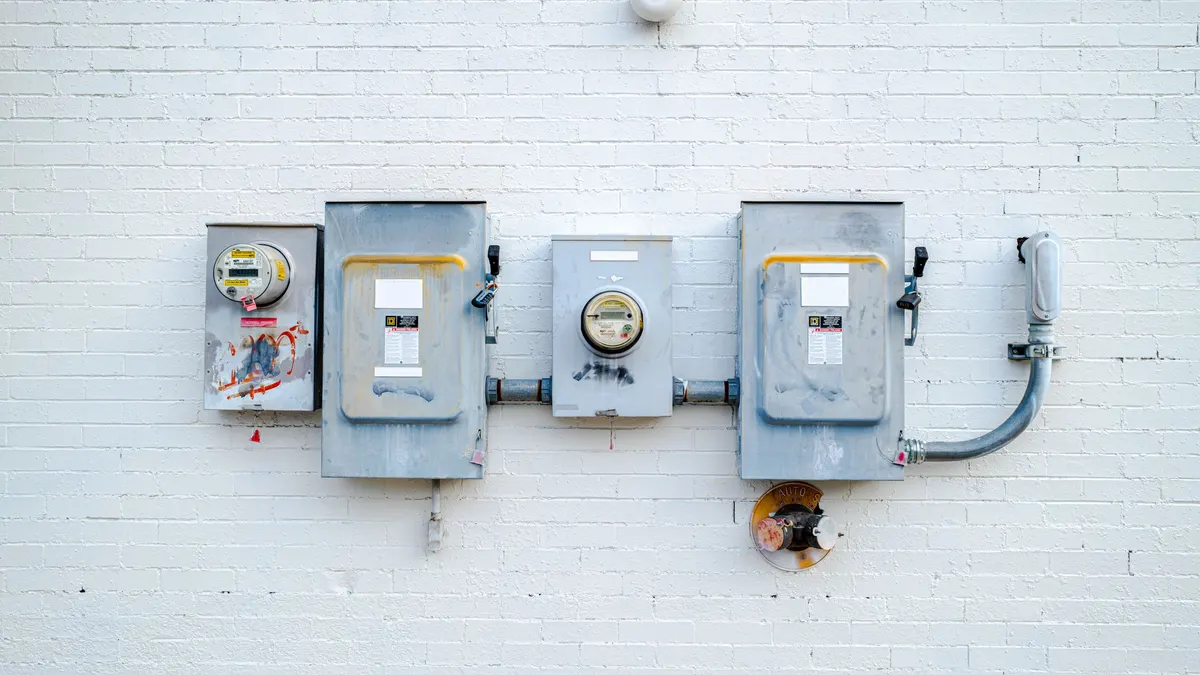
Sizing an electric garage heater
Sizing by square footage alone is risky. A small, insulated, attached garage might need far less heat than a large, detached, uninsulated one of the same area. Ceiling height, the garage door, air leaks and your local winter temperatures all change the answer.
Instead, estimate heat loss. Heat escapes through the walls, ceiling and door, and with cold air that leaks in. The Garage Heater Size Calculator adds those losses for your garage on a cold day and converts the total into BTU per hour, watts and approximate amps. Then choose a heater that meets the load with a modest margin.
If the result is a very large heater, look at insulation and sealing first. Bringing heat loss down often lets you use a smaller heater on a smaller circuit, which saves money twice.
Circuits and wiring
A permanent electric garage heater usually needs its own dedicated circuit, separate from the lights and outlets. The circuit includes a breaker in the panel, wire of the correct size and a disconnect or thermostat as the maker specifies. Local code decides the details, so this is a job for a licensed electrician.
Before hiring, check two things. First, look at your main panel for open spaces and note its rating. Second, consider what else draws power in the garage, such as an air compressor, a car charger or power tools. An electrician can calculate whether the panel can carry the new load.
Detached garages add complexity. HomeGuide notes that wiring a detached garage typically costs more than an attached garage because it often requires a subpanel. If you plan several heavy loads, a subpanel may be the right foundation for the whole workshop.
Installation costs
HomeGuide lists electric garage heaters at $400 to $1,200 with installation. That covers a typical unit and a straightforward hookup. The cost rises if the garage needs new wiring or panel work.
For larger electrical projects, HomeGuide puts the average cost to wire a garage at $1,200 to $5,200, depending on the size, the number and type of circuits, and whether it is attached or detached. Some electricians charge $100 to $300 or more per opening, where each outlet, switch and fixture counts as one opening. If the garage has no power at all, HomeGuide lists running electricity to a detached building at $10 to $25 per linear foot installed.
Ask for an itemized quote that lists the heater, breaker, wire, thermostat and any panel work. That makes quotes easy to compare.
Mounting and placement
Placement affects comfort and safety. Ceiling-mounted unit heaters are often placed in a corner and angled to blow warm air across the garage, so the air circulates rather than pooling near the ceiling. Infrared panels should face the area where you work.
Follow the maker’s clearances exactly. Heaters need space from walls, ceilings, storage and the garage door’s travel path. In addition, keep the heater away from where cars park, so a car door or roof box cannot strike it. Never mount a heater above a workbench where solvents or finishes are used, or where sawdust collects.

Thermostats and controls
A thermostat turns an electric garage heater from a blunt tool into an efficient one. Many unit heaters have a built-in thermostat, while others use a separate wall thermostat rated for the heater’s voltage and current. Choose one designed for line-voltage heaters, since ordinary furnace thermostats are not suitable.
Set the thermostat to the lowest comfortable temperature for your activity. Active work often feels fine at a cooler setting than sitting still. Also consider a programmable or smart thermostat, so the garage is warm when you arrive without heating it all day. Finally, many owners keep a low setback temperature in very cold weather to protect water-based paints and finishes stored in the garage.
Running costs
The running cost of an electric garage heater depends on three things: how many kilowatts it draws, how many hours it runs and your electricity rate. To estimate, multiply the heater’s kilowatt rating by the hours it actually runs, then by your rate per kilowatt-hour from your bill. A thermostat means the heater cycles on and off, so real run time is usually less than the time you spend in the garage.
Insulation has the biggest effect on that run time. A tight, insulated garage holds heat, so the heater runs less often. For that reason, sealing the garage door, insulating walls and the ceiling, and closing the door promptly all cut costs. Our garage insulation guide explains where to start.
Fire safety with electric heaters
Electric heaters do not burn fuel, but they still get hot, and garages are full of things that burn. The U.S. Fire Administration advises keeping anything that can burn at least 3 feet from all heat sources, including space heaters. It also advises turning space heaters off when leaving the room or going to bed.
In a garage, that means storing gas cans, paint, solvents, rags and cardboard well away from the heater. Sweep up sawdust regularly, since fine dust can collect on heater housings. In addition, keep the area under and in front of the heater clear, and never hang clothing or towels on it to dry.
A note on portable electric heaters
Portable heaters are tempting for occasional garage use. HomeGuide lists portable heaters at $50 to $200 and calls them ideal for small, temporary heating needs. However, they carry more fire risk than permanent units. The U.S. Fire Administration reports that home portable heater fires were only 3% of all home heating fires annually for 2017-2019, but they accounted for 41% of fatal heating fires in homes.
If you use one, plug it directly into a wall outlet rather than an extension cord, unless the maker allows it. Place it on a flat, stable surface away from foot traffic, choose a model with tip-over and overheat protection, and never leave it running unattended. For regular garage use, a properly installed permanent heater is the safer choice.
When to consider a 240 volt garage heater upgrade
If a plug-in heater barely takes the edge off, a 240 volt garage heater is the usual next step. These hardwired units deliver far more heat than a portable model, and they run on a dedicated circuit designed for the load. As a result, they warm the whole garage instead of a small circle around your feet.
The upgrade makes most sense when you use the garage regularly, the space is reasonably insulated and your panel has capacity for a new circuit. Ask an electrician to check the panel first. Then pair the heater with a suitable thermostat, so the 240 volt garage heater runs only when needed.
Electric garage heater checklist
- Estimate heat loss with the Garage Heater Size Calculator.
- Insulate and seal the garage before choosing a size.
- Choose a fan-forced, infrared or convection heater for your use.
- Have an electrician confirm the circuit, breaker, wire and panel capacity.
- Mount with the maker’s clearances, away from cars and solvents.
- Add a line-voltage thermostat and set it low.
- Keep anything that can burn at least 3 feet away.
Where to compare electric garage heaters
When you know the wattage and voltage you need, compare current 240-volt electric garage heaters, infrared electric heaters and line-voltage thermostats. Check wattage, voltage and clearance requirements on each listing. For more guides, visit the Garage Heating, Cooling and Insulation hub.
Frequently asked questions about electric garage heaters
What size electric heater do I need for my garage?
It depends on the garage’s size, ceiling height, insulation, door and climate, so square-foot rules of thumb can be far off. Estimate the heat lost through the walls, ceiling and door on a cold day instead. The Garage Heater Size Calculator does that from your measurements.
Does an electric garage heater need 240 volts?
Most permanent electric garage heaters large enough to warm a whole garage run on a dedicated 240-volt circuit. Smaller plug-in heaters run on standard household outlets but heat far less. An electrician can confirm what your panel can support.
How much does an electric garage heater cost to install?
HomeGuide lists electric garage heaters at $400 to $1,200 with installation. If the garage needs new wiring, HomeGuide puts wiring a garage at $1,200 to $5,200, and detached garages often need a subpanel.
Is an electric garage heater expensive to run?
It can be. HomeGuide notes electric heaters are best for smaller spaces needing occasional heat, as they can be more expensive to operate. Insulating the garage, using a thermostat and heating only when you use the space all lower the cost.
How do I use an electric heater safely in a garage?
Keep anything that can burn at least 3 feet away, as the U.S. Fire Administration advises, and turn space heaters off when you leave. Mount permanent heaters with the maker’s clearances, and keep fuel, solvents and sawdust well away.
Sources and how we researched this guide
This guide is research-based. We did not test heaters for this article; we compared heater designs and used HomeGuide’s garage heater installation and garage wiring cost data and U.S. Fire Administration heating fire guidance. Permanent heaters and new circuits should be installed by a licensed electrician to local code. Found something out of date? Tell us and we will check it against the source.
- HomeGuide: Garage heater installation cost
- HomeGuide: Cost to run electricity to a garage or shop
- U.S. Fire Administration: Heating fire safety
Keep planning
- Garage Insulation: Walls, Ceiling, Door, Costs and R-Values
- How to Insulate a Garage Door: Kits, Steps and Costs
- Garage Ventilation Fan: Types, Sizing and Placement Guide
- Garage Heater Guide: Electric, Gas, Infrared and Sizing
Go deeper: Heating, Cooling & Insulation hub · Garage Heater Size Calculator · Garage Ventilation Calculator

Written by Jeremy Jarvis
Jeremy Jarvis is the founder and editor of Garage Playbook, where he builds research-based guides and free planning tools for garage doors, floors, storage, heating and cooling, and workshops. He sets the site's editorial standards, checks every guide against official sources such as federal safety standards, EPA and OSHA guidance and manufacturer documentation, and is responsible for corrections. Jeremy also founded Eco Nomad Travel, Mind Clarity Hub, SilkHarborTravel, WanderOza Travel, Freedom Road Living and PowerProof Home, and he is the author of books on clarity, focus and practical AI, including The Power of Clarity and Digital Clarity.