
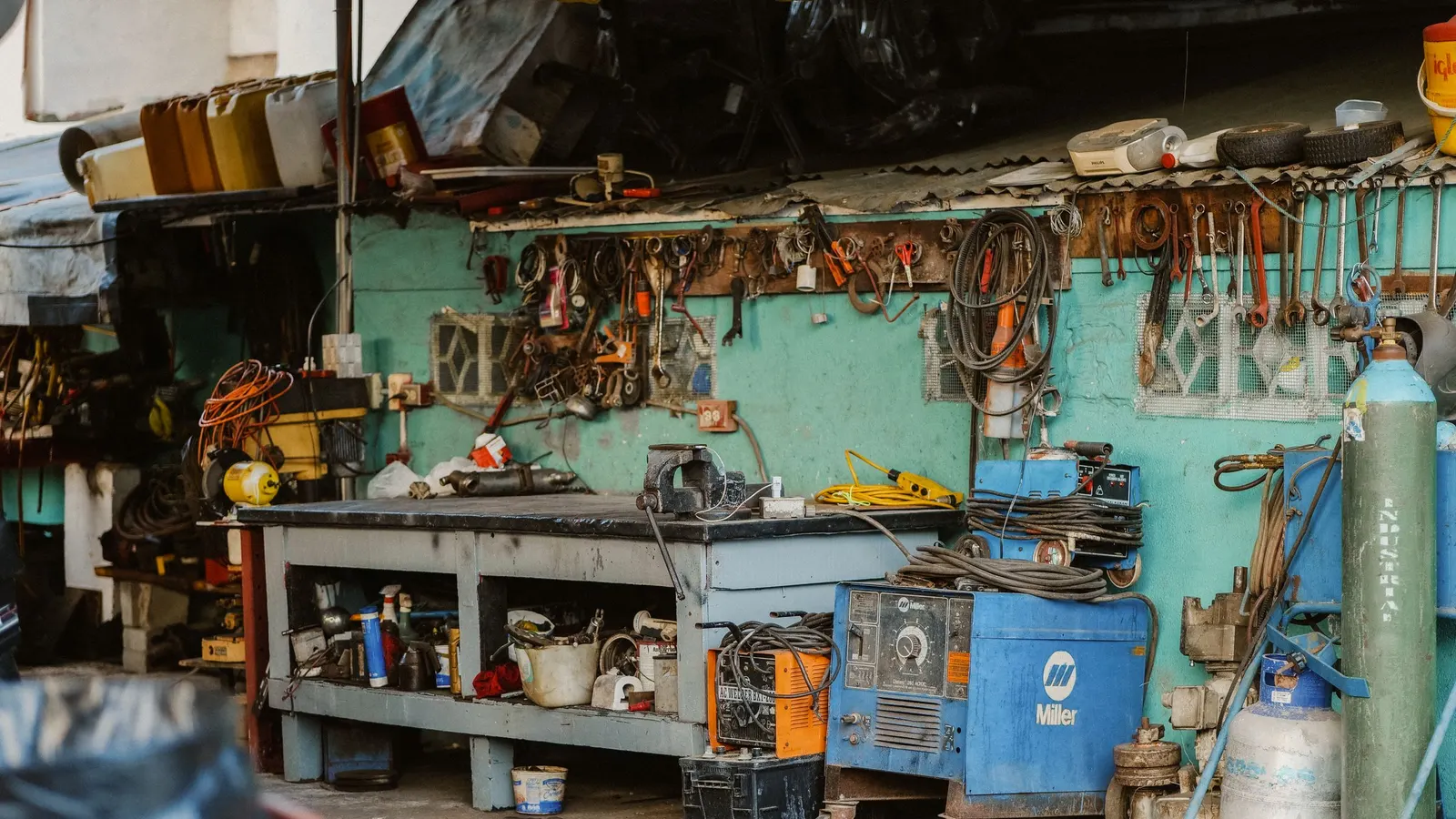
A good garage workshop is less about owning every tool and more about a solid bench, bright light, clean air, a way to manage dust and somewhere to put everything back. This hub covers each piece and the safety habits that keep a home shop injury-free.
Start with the workbench
A sturdy bench at the right height is the center of the shop. Build or buy one deep enough for your projects, with storage underneath and power nearby. See the garage workbench guide and garage workshop ideas.
Light it properly
Most garages are lit far too dimly for work. ENERGY STAR says LED lighting products produce light up to 90 percent more efficiently than incandescent bulbs, and LEDs dim slowly over time rather than burning out. Size the lighting by lumens with the Garage Lighting Calculator, then add task lights over the bench. See the garage lighting guide.
Tool storage
Rolling tool chests, wall systems and cabinets keep tools organized and close to where you use them. See the rolling tool box guide.
Compressed air
Choose a compressor by delivered CFM at 90 PSI, not tank size or horsepower; the Air Compressor CFM Calculator works it out from your tools. In workplaces, OSHA allows compressed air for cleaning only when reduced to less than 30 psi and then only with effective chip guarding and personal protective equipment, a sensible rule at home too.
Dust and fumes
A shop vac handles small jobs; stationary tools that make fine dust benefit from a dust collector. The EPA notes that inadequate ventilation can increase indoor pollutant levels by not bringing in enough outdoor air to dilute emissions. See the shop vac guide and the dust collector guide.
Shop safety
OSHA notes that exposure over 85 decibels can damage your hearing, and that if you need to raise your voice to speak to someone 3 feet away, noise levels might be over 85 decibels. Wear hearing and eye protection. Federal workplace rules for woodworking machinery require guards, spreaders and anti-kickback devices on saws; keep the guards your tools came with in place. New circuits for tools, compressors and heaters belong to a licensed electrician.
Start with these guides
- Garage Workshop Ideas: Layouts, Power, Light and Safety Practical garage workshop ideas: planning zones and workflow, sharing space with cars, power and lighting, benches and storage, mobile machines, dust, noise and safety essentials.
- Garage Workbench: Types, Height, Tops and Setup Ideas How to choose or build a garage workbench: fixed, mobile, fold-down and cabinet benches compared, top materials, the right height and depth, vises, power, lighting, storage and safety.
- Garage Lighting: How Much Light, Which LEDs and Where How to light a garage well: how many lumens you need, LED fixture types compared, color temperature and color rendering, layout for parking and workbenches, controls, wiring and safety.
- Rolling Tool Box: Chests, Carts and How to Choose One How to choose a rolling tool box: tool chests, rolling cabinets, carts and portable rolling boxes compared, with drawer slides, load ratings, casters, steel, locks, organization and tip-over safety.
- Shop Vac Guide: Sizes, Filters, Wet Pickup and Dust Control How to choose and use a shop vac: tank size, airflow and suction explained, filters for fine dust and wet pickup, hoses and accessories, noise, tool connection, safety rules and maintenance.
- Air Compressor for Garage: CFM, Tank Size and Setup Guide How to choose an air compressor for garage use: matching CFM at 90 PSI to your tools, tank size and duty cycle, compressor styles, oil-free vs oiled, power, noise, hoses, drainage and safety.
- Dust Collector Guide: Sizing, Filters and Garage Shop Setup How to choose and set up a dust collector in a garage woodshop: why fine dust matters, collector types compared, airflow and filtration, ducting, blast gates, air cleaners, noise and safety.
Tools for this topic
- Garage Lighting Calculator – lumens and fixtures for your shop
- Air Compressor CFM Calculator – delivered CFM your tools need
- Garage Ventilation Calculator – exhaust airflow for dust and fumes
Latest Workshop guides
New guides are added as they pass our fact-check. Browse everything in Workshop, or get new guides by email.
Sources we rely on
- ENERGY STAR: Learn about LED lighting
- OSHA 29 CFR 1910.242: Hand and portable powered tools
- OSHA: Occupational noise exposure
- eCFR: 29 CFR 1910.213, Woodworking machinery requirements
- EPA: Introduction to indoor air quality
Frequently asked questions
A sturdy workbench, bright lighting, enough outlets on suitable circuits, tool storage, dust control and eye and hearing protection. Add tools as projects need them. More than most garages have. Size it by lumens for your floor area and target brightness, and add task lighting over the bench. A shop vac handles small jobs and cleanup. Stationary tools that produce a lot of fine dust benefit from a dust collector. Many power tools are. OSHA notes exposure over 85 decibels can damage hearing, so wear hearing protection when running loud tools.What do I need to start a garage workshop?
How much light does a garage workshop need?
Do I need a dust collector or is a shop vac enough?
Is my garage loud enough to damage hearing?