
Garage Lighting: How Much Light, Which LEDs and Where
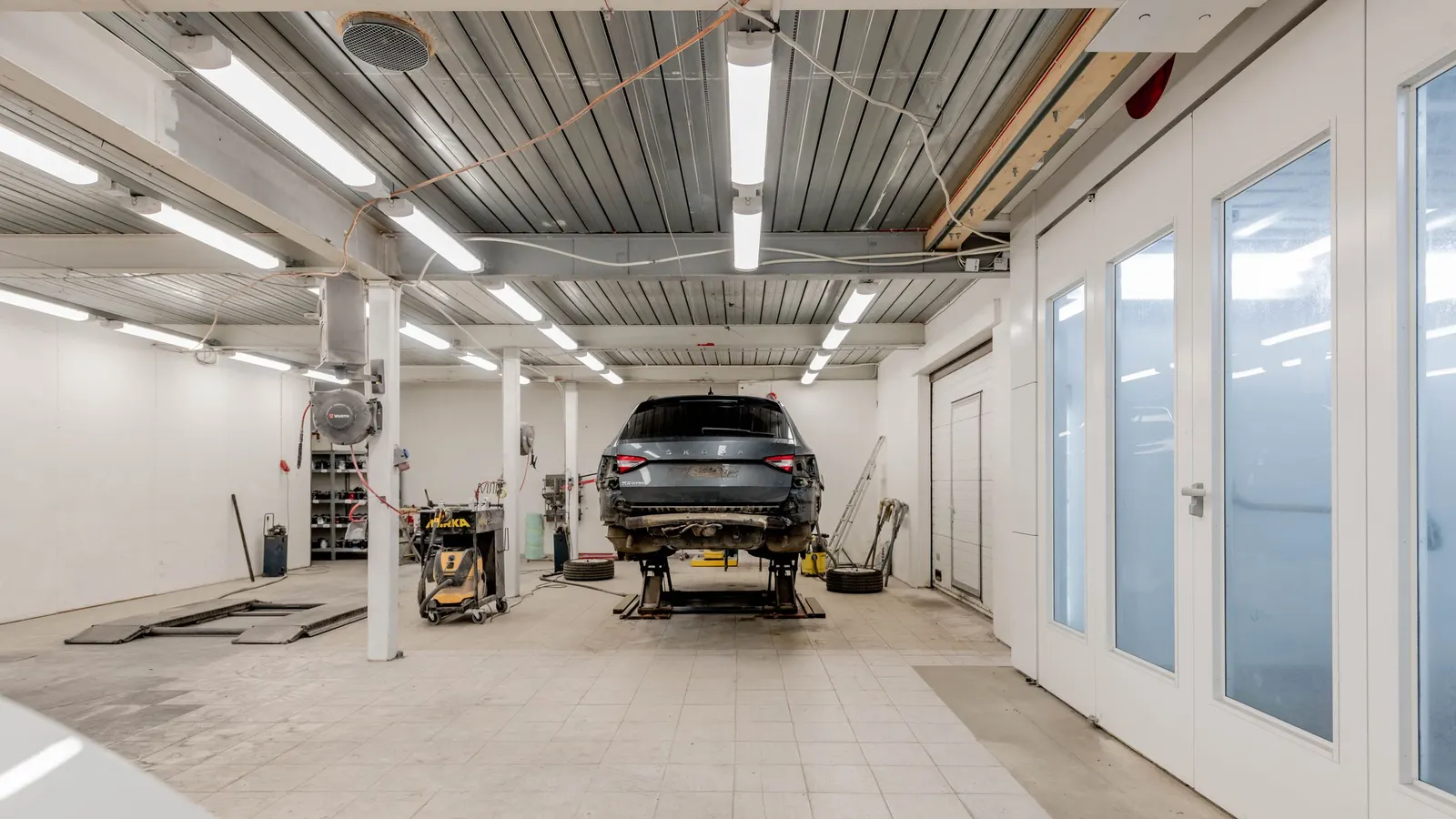
Good garage lighting changes how the whole space works. Most garages are lit by one or two bulbs in the middle of the ceiling, which leave dark corners, deep shadows behind cars and a dim workbench. In contrast, a few well-placed LED fixtures make parking easier, help you find things, and turn the garage into a place where detailed work is possible.
Last reviewed and updated: October 2, 2026. Written by Jeremy Jarvis.
Key takeaways
- Most garages are lit by one or two bulbs that were never meant for work; LED fixtures fix that cheaply.
- Plan by lumens, not watts, and use the lumen method to estimate how much light each area needs.
- ENERGY STAR notes LED lighting produces light up to 90% more efficiently than incandescent bulbs.
- Combine even overhead light for parking with brighter task lighting over the workbench.
This guide explains how much light a garage needs, compares LED fixture types, and covers color, layout, task lighting, controls and wiring. To estimate the lumens your garage needs, use the free Garage Lighting Calculator.
Why garage lighting matters
Poor light is more than an inconvenience. In a dim garage, it is easy to trip over a hose, misjudge the distance to the wall or miss a stray screw on the floor. At the workbench, shadows lead to mistakes and eye strain. Moreover, OSHA’s woodworking guidance notes that improperly guarded machines can cause serious injuries, and good visibility is part of working safely with any tool.
Better light also makes the garage more pleasant. A bright, even space feels larger and cleaner, and you are more likely to use it for projects, workouts or hobbies. As a result, lighting is one of the most cost-effective garage upgrades you can make.
Lumens, not watts
For decades, people chose bulbs by watts. However, watts measure power use, not light output. With LEDs, a fixture can produce a lot of light from relatively few watts. Therefore, compare fixtures by lumens, which measure the light they produce.

Free download: The Garage Makeover Planner
Our 12-page printable planner: garage profile, measurements and layout grid, declutter tracker, zone plan, floor chooser, door safety checks, budget worksheet and order of work.
ENERGY STAR explains that LED lighting products produce light up to 90% more efficiently than incandescent bulbs. In practice, that means an LED fixture delivers far more lumens per watt. When you shop, check the lumen rating on each fixture and add them up to see the total light you will get.
How much light does a garage need?
The right amount depends on the size of the garage and what you do there. Parking and storage need modest, even light. By contrast, a workshop or hobby area needs much more, especially at the bench.
Lighting designers use the lumen method to estimate this. First, measure the floor area. Next, choose a target brightness for the activity. Then adjust for how much light actually reaches the work surface and for dust and aging over time. The Garage Lighting Calculator does that math and tells you roughly how many lumens, and how many fixtures of a given rating, you need.
Once you have a total, split it across several fixtures rather than relying on one. Several sources spread light evenly and reduce shadows.

Types of garage lighting fixtures
Several fixture styles suit garages. Each has strengths for different ceilings and budgets.
| Fixture | Strengths | Best for |
|---|---|---|
| LED shop lights (linear) | Even light, often linkable, easy to hang | Most garage ceilings |
| LED strip or batten fixtures | Slim, continuous rows of light | Long runs over parking and benches |
| Screw-in multi-panel LED bulbs | Upgrade existing sockets without wiring | Quick improvements, rentals |
| High bay fixtures | Powerful light from high ceilings | Tall garages and workshops |
| Flat panel lights | Low profile, finished look | Finished garages and gyms |
| Under-cabinet task lights | Light right where you work | Workbenches and tool walls |
For most garages, linear LED shop lights are the practical favorite. Many can be linked end to end and plugged into a single outlet, which makes installation simple. Meanwhile, screw-in panel bulbs offer a quick upgrade for existing sockets.
Choosing a color temperature
Color temperature describes how warm or cool white light looks. Warmer light looks yellowish and cozy, while cooler light looks crisp and bluish. Many people prefer neutral to cool white in garages and workshops, because it looks bright and clean and helps with detail work.
That said, personal preference matters. A garage gym or hangout space may feel nicer with slightly warmer light. Whatever you choose, use the same color temperature for every fixture. Mixed colors make the space look patchy and can make it harder to judge colors on paint and parts.
Color rendering for detail work
Color rendering describes how accurately a light shows colors. It is often listed as a CRI number, and higher is better. For general garage use, ordinary LEDs are fine. However, if you paint, finish wood, match car touch-up colors or do electronics, choose fixtures with higher color rendering for the work area.
Good color rendering also makes it easier to spot stains, leaks and scratches. In a detailing bay, for example, it helps reveal swirl marks in paint.
Planning the layout
Layout decides whether light reaches where you need it. In a parking area, place fixtures so light falls along both sides of each car, not just over the roof. Otherwise, the car blocks light from reaching the floor beside it, which is exactly where you walk and open doors.
Next, think about obstacles. Garage door tracks, the opener rail and ceiling storage racks all cast shadows. Position fixtures between these obstructions rather than directly above them. In addition, light the walls where you store things, so labels and tools are easy to see. Finally, add a fixture near each entry door, so you never walk into a dark garage.
Task lighting at the workbench
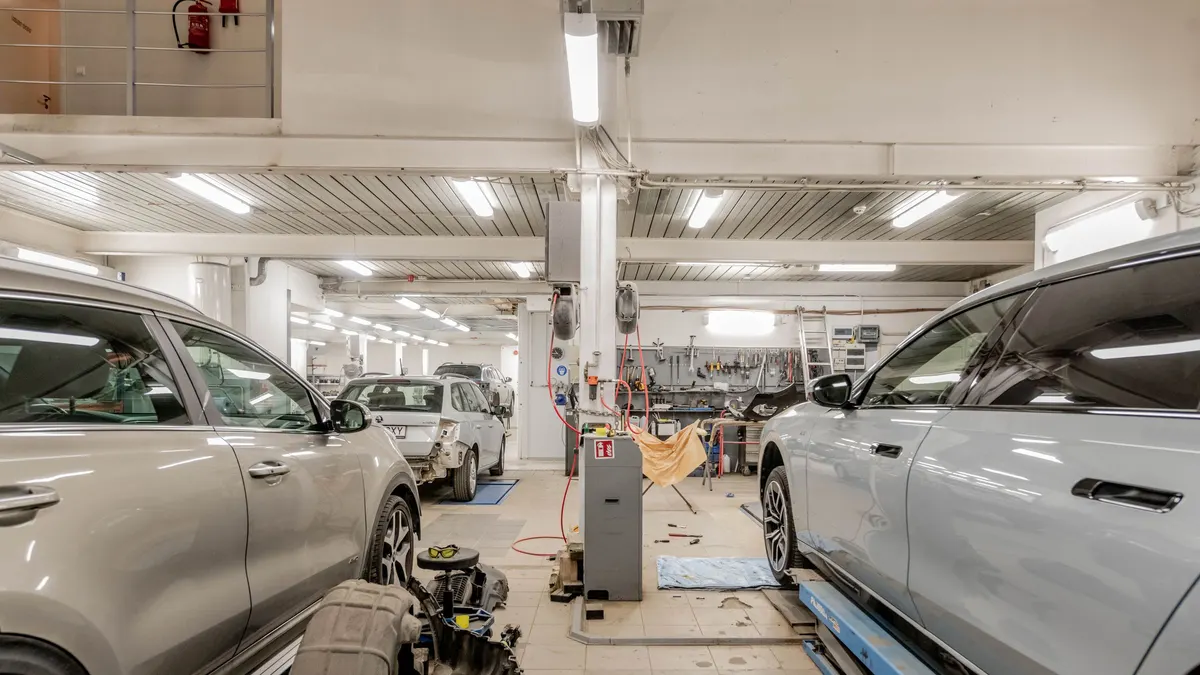
Even a well-lit garage benefits from extra light at the bench. Overhead fixtures sit behind you while you work, so your body shades the surface. Task lights mounted above or in front of the bench solve that problem.
Under-cabinet LED strips, a linear fixture directly over the bench or an adjustable lamp all work well. Choose higher color rendering here if you do detailed work. Our garage workbench guide covers how lighting, power and storage fit together around the bench.
Controls and convenience
Controls make lighting easier to use. A switch at each entry door means you can turn lights on as you walk in. Motion sensors are handy when your hands are full of groceries or tools. Meanwhile, separate switches for the parking area and the workshop let you light only what you need.
Some owners add smart switches or plugs, so lights can be controlled from a phone or linked to the garage door opener. Others prefer simple timers. Whatever you choose, keep at least one switch near each door for safety.
Wiring and installation
Plug-in fixtures and screw-in bulbs are easy DIY upgrades. Hardwired fixtures, new switches and new circuits, however, should follow local electrical code, and many homeowners hire a licensed electrician for them.
HomeGuide notes that some electricians charge $100 to $300 or more per opening for wiring or rewiring, and each outlet, switch and fixture counts as one opening. For a bigger project, it puts the average cost to wire a garage at $1,200 to $5,200. Planning all the lighting at once, rather than adding fixtures piecemeal, usually saves on labor.
LEDs in cold and dusty garages
Garages are tough on lights. Fortunately, LEDs handle cold well and start instantly, unlike some older fluorescent tubes that flicker or stay dim in winter. That makes them a good fit for unheated garages.
Dust is the other challenge. ENERGY STAR notes that LEDs produce heat that is absorbed into a heat sink to prevent performance issues, so keep fixtures reasonably clean. In a workshop with sanding and cutting, choose enclosed or sealed fixtures and wipe them down occasionally.
Efficiency and lifespan
LEDs save energy and last a long time. ENERGY STAR explains that LEDs typically do not burn out or fail suddenly. Instead, they experience lumen depreciation, meaning the brightness dims slowly over time. It also notes that LED lifetime is established on a prediction of when light output decreases by 30 percent.
For garages, that is useful. Fixtures on high ceilings rarely need changing, and you can plan replacements when the light starts to look dim. Moreover, because LEDs use less energy, leaving them on a little longer while you work costs less than with older bulbs.
Upgrading to LED garage lights on a budget
You do not need to rewire the whole garage to see a big improvement. Start by replacing old bulbs with LED garage lights or multi-panel LED bulbs in the existing sockets. Next, add plug-in linkable shop lights over the parking area and workbench. These steps often double or triple the usable light for a modest cost.
Later, if you build out a workshop, add hardwired fixtures, dedicated switches and task lighting. Because LED garage lights use little power, many owners can add several fixtures without overloading an existing lighting circuit, although an electrician should confirm that.
Lighting a garage gym or hobby space
Not every garage is a workshop. If yours is a gym, studio or hangout space, the goals shift slightly. Even, glare-free light matters more than intense task lighting. For example, flat panel fixtures or diffused LED battens spread light softly, which is easier on the eyes when you are looking up during a workout.
Mirrors and glossy floors can bounce light into your eyes, so test fixture positions before mounting them permanently. In addition, a dimmer or separate switches let you change the mood between a bright workout and a relaxed evening. Warmer color temperatures often suit these spaces better than the crisp white of a workshop.
Entry and outdoor garage lighting
Lighting does not stop at the garage door. A fixture outside the main door and beside any side door makes arriving home safer and helps you see the driveway. Motion-activated outdoor lights add security, since they switch on when someone approaches.
Inside, many garage door openers include a built-in light that turns on when the door moves. That light helps, but it is rarely enough on its own. Therefore, pair it with an entry switch or a motion sensor for the main lights. Finally, if you store things along the side of the house or in a detached garage, a path light between the buildings prevents trips in the dark.
Common garage lighting mistakes
The most common mistake is relying on a single bright fixture in the middle of the ceiling. It creates harsh shadows beside cars and along walls. Another is placing lights directly above the garage door tracks or opener rail, where the open door blocks them.
Some owners mix warm and cool bulbs, which makes the space look uneven. Others forget task lighting, so the workbench stays in their own shadow. Finally, skipping switches at secondary doors means walking across a dark garage to reach the light, which is exactly when accidents happen.
Garage lighting checklist
- Estimate total lumens with the Garage Lighting Calculator.
- Choose LED fixtures and compare them by lumens, not watts.
- Spread several fixtures across the ceiling to reduce shadows.
- Light both sides of parked cars and the storage walls.
- Add task lighting over the workbench.
- Use one color temperature throughout.
- Put switches at every entry door.
- Have an electrician handle new circuits and hardwired fixtures.
Where to compare garage lights
When you know how many lumens you need, compare current linkable LED shop lights, multi-panel LED garage bulbs and under-cabinet task lights. Check lumens, color temperature and mounting on each listing. For more workshop guides, visit the Workshop and Tools hub.
Frequently asked questions about garage lighting
How many lumens do I need for my garage?
It depends on the garage’s area, what you do there and how much light reaches the work. Parking and storage need less light than a workshop. The Garage Lighting Calculator uses the lumen method: area times target brightness, adjusted for light loss, to estimate total lumens.
What color temperature is best for a garage?
Many people prefer a neutral to cool white for garages and workshops because it looks crisp and helps with detail work. Warmer light feels cozier for a gym or hangout space. Whatever you choose, use the same color for all fixtures so the light looks even.
Are LED lights good for cold garages?
Generally, yes. LEDs start instantly in cold weather, unlike some older fluorescent tubes. ENERGY STAR also notes that LEDs typically do not burn out but dim slowly over time, which suits garages where lights are hard to reach.
How many lights should a garage have?
Enough to spread light evenly without dark corners. Several fixtures spaced across the ceiling usually work better than one very bright light in the middle, because they reduce shadows from cars, racks and your own body.
Do I need an electrician to add garage lights?
Swapping a bulb or plugging in a fixture is DIY, but new circuits, switches and hardwired fixtures should follow local code. HomeGuide notes some electricians charge $100 to $300 or more per opening, with each fixture counting as one opening.
Sources and how we researched this guide
This guide is research-based. We did not test fixtures for this article; we used ENERGY STAR’s LED lighting guidance, OSHA’s woodworking guidance and HomeGuide’s garage wiring cost data, and our calculator uses the lumen method lighting designers use. Have a licensed electrician add or change circuits. Found something out of date? Tell us and we will check it against the source.
- ENERGY STAR: Learn about LED lighting
- HomeGuide: Cost to run electricity to a garage or shop
- OSHA eTool: Woodworking
Keep planning
- Standard Garage Door Sizes: Single, Double and How to Measure
- Shop Vac Guide: Sizes, Filters, Wet Pickup and Dust Control
- Rolling Tool Box: Chests, Carts and How to Choose One
- Garage Workshop Ideas: Layouts, Power, Light and Safety
Go deeper: Tools directory · Garage Makeover Plan Builder

Written by Jeremy Jarvis
Jeremy Jarvis is the founder and editor of Garage Playbook, where he builds research-based guides and free planning tools for garage doors, floors, storage, heating and cooling, and workshops. He sets the site's editorial standards, checks every guide against official sources such as federal safety standards, EPA and OSHA guidance and manufacturer documentation, and is responsible for corrections. Jeremy also founded Eco Nomad Travel, Mind Clarity Hub, SilkHarborTravel, WanderOza Travel, Freedom Road Living and PowerProof Home, and he is the author of books on clarity, focus and practical AI, including The Power of Clarity and Digital Clarity.