
Rolling Tool Box: Chests, Carts and How to Choose One

A rolling tool box keeps your tools organized in one place and rolls them to wherever you are working. Instead of walking back and forth to a shelf or a pile of cases, you bring the drawers of wrenches, sockets and screwdrivers right to the car, the bench or the lawn mower. As a result, projects go faster and tools are far less likely to go missing.
Last reviewed and updated: October 2, 2026. Written by Jeremy Jarvis.
Key takeaways
- A rolling tool box keeps tools organized and brings them to the job instead of making you walk back and forth.
- Size it to the tools you own now plus room to grow, with drawer depths matched to your largest tools.
- Ball-bearing slides, rated drawers, locking casters and solid steel construction matter more than drawer count.
- Open one drawer at a time, lock the casters and anchor tall chests so they cannot tip.
This guide compares the main types of rolling tool box, explains how to size one, and covers drawer slides, load ratings, casters, construction, locks, organization and safety. For the bigger workshop picture, see our garage workshop ideas.
Why choose a rolling tool box
Tools stored in many places waste time. You hunt for the right socket, find half a set and buy duplicates of what you already own. A rolling tool box solves that by giving every tool a home in shallow drawers you can see at a glance.
Mobility is the other big advantage. In a garage, work happens in many spots: around a car, at the workbench, by the door. A box on casters follows you there. Moreover, a box that rolls can be tucked against a wall when the car needs the space, which suits garages that double as parking.
Types of rolling tool box
Rolling tool storage comes in several forms. Each suits a different tool collection and garage.
Free download: The Garage Makeover Planner
Our 12-page printable planner: garage profile, measurements and layout grid, declutter tracker, zone plan, floor chooser, door safety checks, budget worksheet and order of work.
| Type | What it is | Best for |
|---|---|---|
| Rolling tool chest with top chest | A rolling cabinet with a separate chest stacked on top | Large collections, mechanics |
| Rolling tool cabinet | A single wide cabinet of drawers on casters | Most home garages |
| Tool cart | Open trays or shelves on wheels | Carrying tools for the current job |
| Portable rolling toolbox | Stackable boxes with a handle and wheels | Taking tools away from the garage |
| Mobile workbench cabinet | Drawers under a work surface | Combining storage and a bench |
For most home garages, a rolling tool cabinet is the sweet spot. It holds a good collection, provides a top surface and moves easily. Larger collections may justify a top chest. Meanwhile, a tool cart is a handy companion that carries just the tools for today’s job.
Sizing a rolling tool box
Size is the most important decision, and it is easy to get wrong. Start by laying out the tools you own on a tarp or table, grouped by type. Then estimate how much drawer area each group needs. Sockets and wrenches lie flat in shallow drawers, while power tools, hammers and saws need deeper ones.
Next, add room to grow. Tool collections expand, and a box that is full on day one will soon overflow. Finally, measure your garage. Check the width and height of the space, and leave room in front to open drawers fully and stand comfortably. A chest that blocks a walkway or a car door becomes a constant frustration.
Drawers and slides
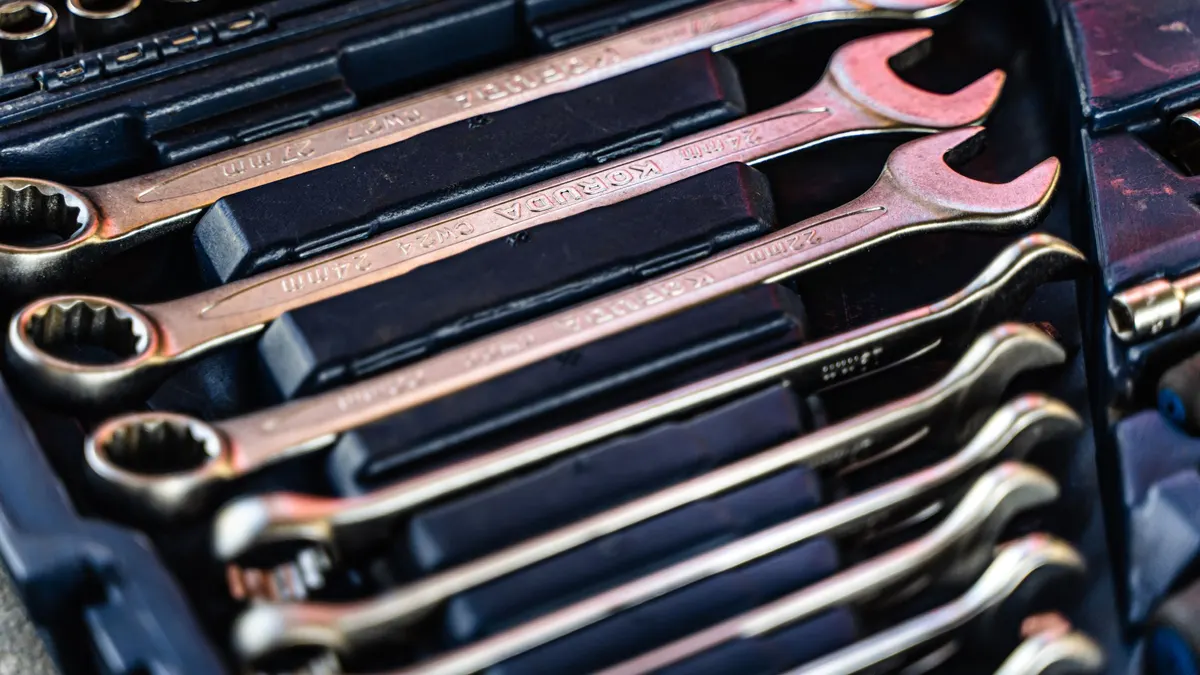
Drawers are where you interact with the box every day, so their quality matters more than their number. Ball-bearing slides open smoothly even when a drawer is full of heavy wrenches, and they usually extend further, so you can reach the back. By contrast, friction slides are cheaper but can stick and wear under heavy loads.
Look for drawers that close fully and stay shut when the box rolls. Some boxes use drawer latches, while others rely on a lock bar. In addition, drawer liners protect the steel and stop tools sliding around.
Load ratings
Every drawer has a load rating, and the box as a whole has a weight limit, including casters. Tools are heavy. A drawer of sockets or a set of wrenches weighs more than it looks. Therefore, check the ratings against what you plan to store, and keep the heaviest tools in the lowest, strongest drawers.
Overloading drawers bends slides and causes drawers to sag or jam. It also raises the box’s center of gravity if heavy tools sit high, which affects stability. If you are unsure, weigh a full drawer’s worth of tools on a bathroom scale before loading the box.
Casters and mobility
Casters decide how easily the box rolls and how stable it is when parked. Larger casters roll over cracks, cords and expansion joints more easily. Locking casters keep the box in place while you work. Many boxes use two swivel casters and two fixed casters, which makes steering easier.
Consider your floor. A rough or cracked slab, interlocking tiles or a slope toward the door all make rolling harder. Our garage floor tiles guide explains how tiles affect rolling carts. Lock the casters whenever the box is parked, especially on a sloped floor.
Construction and finish
Most quality rolling tool boxes are made of steel. Thicker steel feels more solid, resists dents and keeps drawers aligned under load. A powder-coated finish protects against rust and wipes clean easily, which matters in damp garages.
Check the frame and corners. Welded construction is stiffer than bolted assembly. Also look at the handle, which takes the force of pushing a heavy box. A sturdy, well-attached handle makes moving the box safer and easier.
Locks and security
Locks keep tools secure and keep curious children out of sharp tools. Many boxes use a single key lock that secures all drawers through a lock bar. Others offer keyless or electronic locks.
Even with a lock, a box near an open garage door is visible from the street. Close the garage door when you are not working, and consider where you park the box. In addition, keep a record of valuable tools and their serial numbers.
Work surface and power
The top of a rolling tool box makes a handy work surface. Some boxes have a solid wood or stainless top, while others have a rubber mat. A durable top lets you set down parts, assemble small items or rest a laptop with a repair manual.
Many boxes also include a built-in power strip with USB ports. That is useful for charging batteries and running small tools without hunting for an outlet. However, check the power strip’s rating, and do not run high-draw tools such as heaters or compressors through it. For heavier needs, our garage workbench guide covers planning outlets around a work area.
Organizing your rolling tool chest
A rolling tool chest works best when every tool has a spot. Group tools by task: one drawer for sockets, one for wrenches, one for screwdrivers and pliers, and deeper drawers for power tools. Put the tools you use most in the top drawers, where they are easiest to reach.
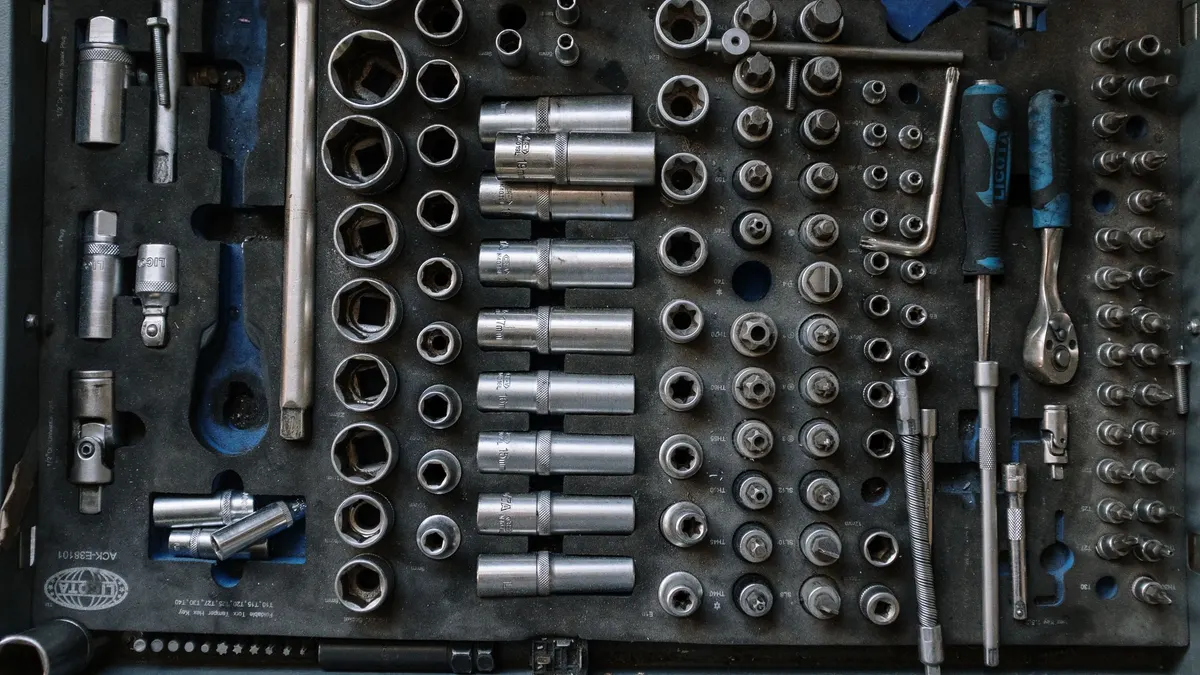
Socket rails, wrench racks and foam inserts keep tools upright and visible. Foam with cutouts also shows instantly when a tool is missing. Label drawers on the front, so everyone in the household can find and return tools. Finally, keep a small tray on top for the parts and fasteners of the current project.
Tip-over safety
Tall, heavy rolling tool boxes can tip if several drawers are opened at once or if someone climbs on them. That is a serious risk, especially with children in the home. Many boxes include an interlock that lets only one drawer open at a time. If yours does not, make it a habit.
Load heavy tools low, lock the casters and never use the box as a step. For tall chests with a top chest, use any anti-tip features the maker provides, or anchor the chest to the wall. In addition, keep the box on level ground when drawers are open.
Where to place your tool box
Place the box close to where you work most, often beside the workbench or near the parking bay where you work on cars. Leave room in front to open drawers fully and stand. Keep it out of walkways and the swing of car doors.
Avoid storing it next to the water heater or other appliances that need clearance. Also, keep chemicals out of the tool box. EPA notes that paints, varnishes and many cleaning, degreasing and hobby products contain organic solvents, and it advises meeting or exceeding label precautions. Store them in a separate cabinet, away from heat.
Care and cleaning
A little care keeps a rolling tool box working for decades. Vacuum drawers occasionally to remove dust and metal shavings. Wipe the outside with a mild cleaner, and touch up chips in the finish to prevent rust.
Be careful with compressed air. OSHA’s workplace rule says compressed air shall not be used for cleaning except where reduced to less than 30 psi, and then only with effective chip guarding and personal protective equipment. At home, a vacuum is usually the safer way to clean drawers. Finally, check that casters spin freely and that slides move smoothly, and lubricate them if the maker recommends it.
Matching a rolling tool box to your work
The best rolling tool box depends on what you fix. Car enthusiasts typically need many shallow drawers for sockets, wrenches and specialty tools, plus a deep drawer for impact guns and a creeper nearby. Woodworkers, by contrast, often need deeper drawers for routers, sanders and hand planes, and a solid top for layout work.
General home repair falls in between. A mid-size cabinet with a mix of shallow and deep drawers covers screwdrivers, pliers, a drill, a level and fasteners. Meanwhile, hobbyists working on bikes, electronics or models may prefer a smaller cart that rolls right up to the bench. In each case, list your tasks first, then choose drawer sizes that match the tools those tasks require.
Common mistakes when buying a tool box
The most common mistake is buying for drawer count instead of drawer quality. Ten flimsy drawers frustrate you daily, while six smooth, sturdy ones make work easier. Another mistake is buying a box that is already full, leaving no room for new tools.
Some buyers forget to measure the garage and end up with a chest that blocks a walkway or the swing of a car door. Others choose small casters that catch on every crack. Finally, ignoring tip-over safety, especially with children at home, is a risk that is easy to avoid with an interlock, low loading and locked casters.
Rolling tool box checklist
- Lay out your tools and estimate the drawer area you need.
- Add room to grow and measure the garage space.
- Choose ball-bearing slides with suitable load ratings.
- Pick large, locking casters for your floor.
- Look for solid steel, a durable finish and a sturdy handle.
- Organize drawers by task and label them.
- Open one drawer at a time and never climb the box.
Where to compare rolling tool boxes
When you know the size and features you need, compare current rolling tool chests, rolling tool carts and drawer organizers. Check drawer ratings, caster size and dimensions on each listing. For more workshop guides, visit the Workshop and Tools hub.
Frequently asked questions about rolling tool boxes
What size rolling tool box do I need?
Lay out the tools you own, group them by type and measure how much drawer area they need. Add room for growth, and check that your largest tools fit the deepest drawers. Then measure the garage space so the box fits with room to open drawers fully.
Are ball-bearing drawer slides worth it?
Yes, for most users. Ball-bearing slides open smoothly under load, extend further and last longer than friction slides. They make heavy drawers of wrenches and sockets much easier to use every day.
How do you stop a tool chest from tipping?
Open only one drawer at a time, load heavy tools in the lowest drawers, lock the casters and never climb on the chest. For tall chests, use any anti-tip features the maker provides or anchor the chest to the wall.
How should I organize a rolling tool chest?
Group tools by task, put the most-used tools in the top drawers, and use drawer liners, socket rails and foam inserts so each tool has a spot. Label drawers so everyone in the household can find and return tools.
Can I use compressed air to clean out tool drawers?
Use care. OSHA’s workplace rule says compressed air used for cleaning must be reduced to less than 30 psi and used only with effective chip guarding and personal protective equipment. A vacuum is often the safer choice for drawers.
Sources and how we researched this guide
This guide is research-based. We did not test tool chests for this article; we compared common designs and features and used OSHA guidance on hand and portable powered tools and woodworking hazards, plus EPA guidance on storing solvents. Follow each maker’s load ratings and safety instructions. Found something out of date? Tell us and we will check it against the source.
- OSHA 29 CFR 1910.242: Hand and portable powered tools
- EPA: Volatile organic compounds’ impact on indoor air quality
- OSHA eTool: Woodworking
Keep planning
- Shop Vac Guide: Sizes, Filters, Wet Pickup and Dust Control
- Garage Workshop Ideas: Layouts, Power, Light and Safety
- Garage Workbench: Types, Height, Tops and Setup Ideas
- Garage Lighting: How Much Light, Which LEDs and Where
Go deeper: Workshop hub · Garage Lighting Calculator · Air Compressor CFM Calculator

Written by Jeremy Jarvis
Jeremy Jarvis is the founder and editor of Garage Playbook, where he builds research-based guides and free planning tools for garage doors, floors, storage, heating and cooling, and workshops. He sets the site's editorial standards, checks every guide against official sources such as federal safety standards, EPA and OSHA guidance and manufacturer documentation, and is responsible for corrections. Jeremy also founded Eco Nomad Travel, Mind Clarity Hub, SilkHarborTravel, WanderOza Travel, Freedom Road Living and PowerProof Home, and he is the author of books on clarity, focus and practical AI, including The Power of Clarity and Digital Clarity.