
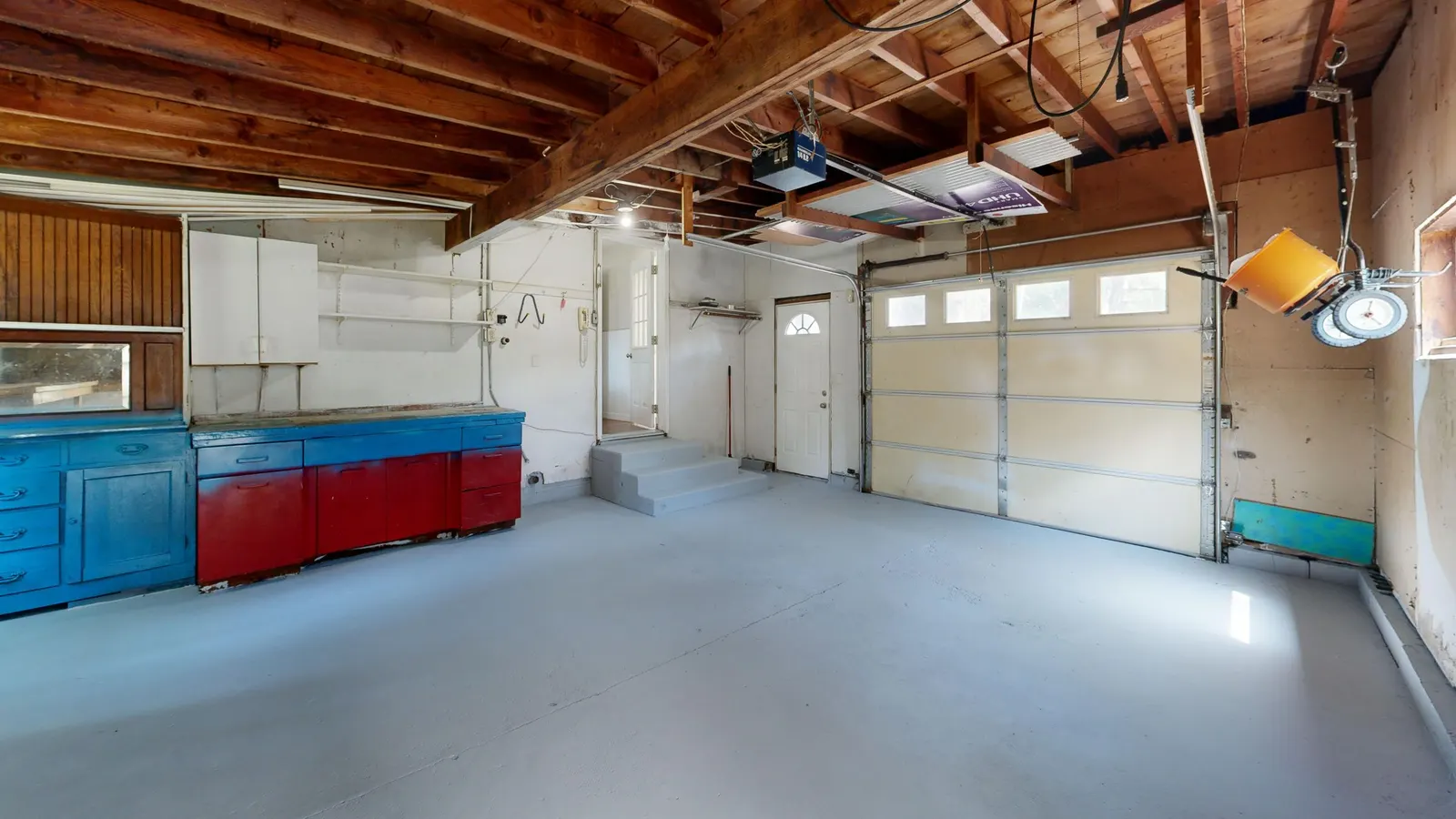
A finished garage floor resists oil and road salt, cleans easily, brightens the whole room and makes a garage feel like part of the house. The choices range from a weekend of floor paint to professionally installed polyaspartic systems. This hub explains each option, why preparation matters more than the product, and how to choose for your garage.
Your options at a glance
Floor paint and one-part coatings
The cheapest and simplest option. Paint improves the look and makes cleaning easier, but it wears faster under hot tires and chemicals than two-part systems.
Two-part epoxy
A resin and hardener mixed on site that bonds to properly prepared concrete and forms a hard, chemical-resistant film. Most DIY kits are epoxy. Many systems add decorative flakes and a clear topcoat.
Polyaspartic and polyurea systems
Professional-grade coatings that cure much faster and are often marketed as more UV-stable. Fast cure means less working time, which is one reason many are installed by professionals. Compare them in polyaspartic vs epoxy.
Interlocking tiles and roll-out mats
No chemistry and no curing: tiles snap together over the existing slab and hide stains and cracks, and mats catch snowmelt and drips. They are the fastest upgrade and easy to take with you when you move.
Preparation decides whether a coating lasts
Coatings bond to clean, sound, open-pored concrete. Most failures come from poor preparation: oil left in the slab, a smooth or sealed surface, or moisture coming up through the concrete. Professionals grind the floor; many DIY kits rely on cleaning and etching. Either way, follow the product’s instructions exactly.
Test for moisture first
All concrete subfloors emit some amount of moisture in vapor form, and ASTM notes that all floor coverings are susceptible to failure from excessive moisture vapor emissions. Two standard tests help. ASTM D4263, the plastic sheet method, indicates the presence of capillary moisture in concrete. ASTM F1869 measures the moisture vapor emission rate with anhydrous calcium chloride, reported as pounds of water evaporating from 1,000 square feet of concrete in 24 hours. Your coating maker states the limit its product tolerates.
Fumes and ventilation
Coatings, solvents and strippers release volatile organic compounds. The EPA notes that during and for several hours after activities such as paint stripping, levels may be 1,000 times background outdoor levels, and it advises increasing ventilation and meeting or exceeding label precautions. Open the garage door, run fans, wear the respirator the safety data sheet calls for, and keep children and pets away until the product has cured.
How to choose
Choose paint for a quick refresh, a two-part epoxy kit if you are comfortable with careful prep, a professional epoxy or polyaspartic system for the most durable finish, and tiles or mats if the slab is cracked, damp or you want no chemistry at all. Use the Epoxy Floor Coverage Calculator or the Garage Floor Tile Calculator to work out quantities.
Start with these guides
- Epoxy Garage Floor: Types, Costs, Prep and Lifespan How an epoxy garage floor works, the main epoxy types, what it costs, how long it lasts, why moisture testing and prep matter, and how epoxy compares with polyaspartic and polyurea.
- Epoxy Garage Floor Cost: Pro vs DIY Prices and Hidden Extras What an epoxy garage floor costs per square foot and by garage size, how DIY kits compare, and the crack repair, grinding and moisture extras that move a quote.
- How to Epoxy a Garage Floor: Step-by-Step DIY Kit Guide A practical, step-by-step guide to applying a garage floor epoxy kit: moisture testing, grinding or etching, crack repair, mixing, rolling, flakes, top coat and cure.
- Polyaspartic Floor Coating: Cost, Lifespan and vs Epoxy What a polyaspartic floor coating is, how it compares with epoxy and polyurea on cost, cure time, adhesion and lifespan, and why many installers now use it as a top coat.
- Garage Floor Paint: Types, Prep and When to Choose Coating The main types of garage floor paint, how they differ from true epoxy coatings, how to prepare and paint concrete, and when paint is the smarter choice for your garage.
- Garage Floor Tiles: Types, Costs and How to Install Them How garage floor tiles work, the difference between rigid, flexible and vented tiles, what they cost compared with coatings, and how to lay out and install them.
- Garage Floor Mats: Containment, Parking and Anti-Fatigue Mats The main types of garage floor mats, how containment mats handle snow and slush, how to size a parking mat, which materials last, and how mats compare with tiles and coatings.
Tools for this topic
- Epoxy Floor Coverage Calculator – gallons, kits and flakes from your floor and label
- Garage Floor Tile Calculator – tiles, ramps and boxes
- Garage Makeover Plan Builder – where the floor fits in your plan
Latest Garage Floors guides
New guides are added as they pass our fact-check. Browse everything in Garage Floors, or get new guides by email.
Sources we rely on
- ASTM D4263: Moisture in concrete by the plastic sheet method
- ASTM F1869: Moisture vapor emission rate using calcium chloride
- EPA: Volatile organic compounds and indoor air quality
- EPA: A brief guide to mold, moisture and your home
Frequently asked questions
Both can perform well on properly prepared concrete. Polyaspartic systems cure much faster and are often marketed as more UV-stable, while epoxy offers more working time and is common in DIY kits. Most failures come from poor preparation, such as oil in the slab or a smooth surface, or from moisture coming up through the concrete. Test for moisture and follow the product’s preparation steps. A simple first check is the plastic sheet method described in ASTM D4263, which indicates capillary moisture. ASTM F1869 uses calcium chloride to measure the moisture vapor emission rate. Tiles install quickly with no fumes or curing and hide cracks and stains. Coatings are seamless and easier to sweep. Tiles also suit slabs too damp for coatings.Is epoxy or polyaspartic better for a garage floor?
Why do garage floor coatings peel?
How do I test my garage floor for moisture?
Are garage floor tiles better than epoxy?