
Epoxy Garage Floor Cost: Pro vs DIY Prices and Hidden Extras
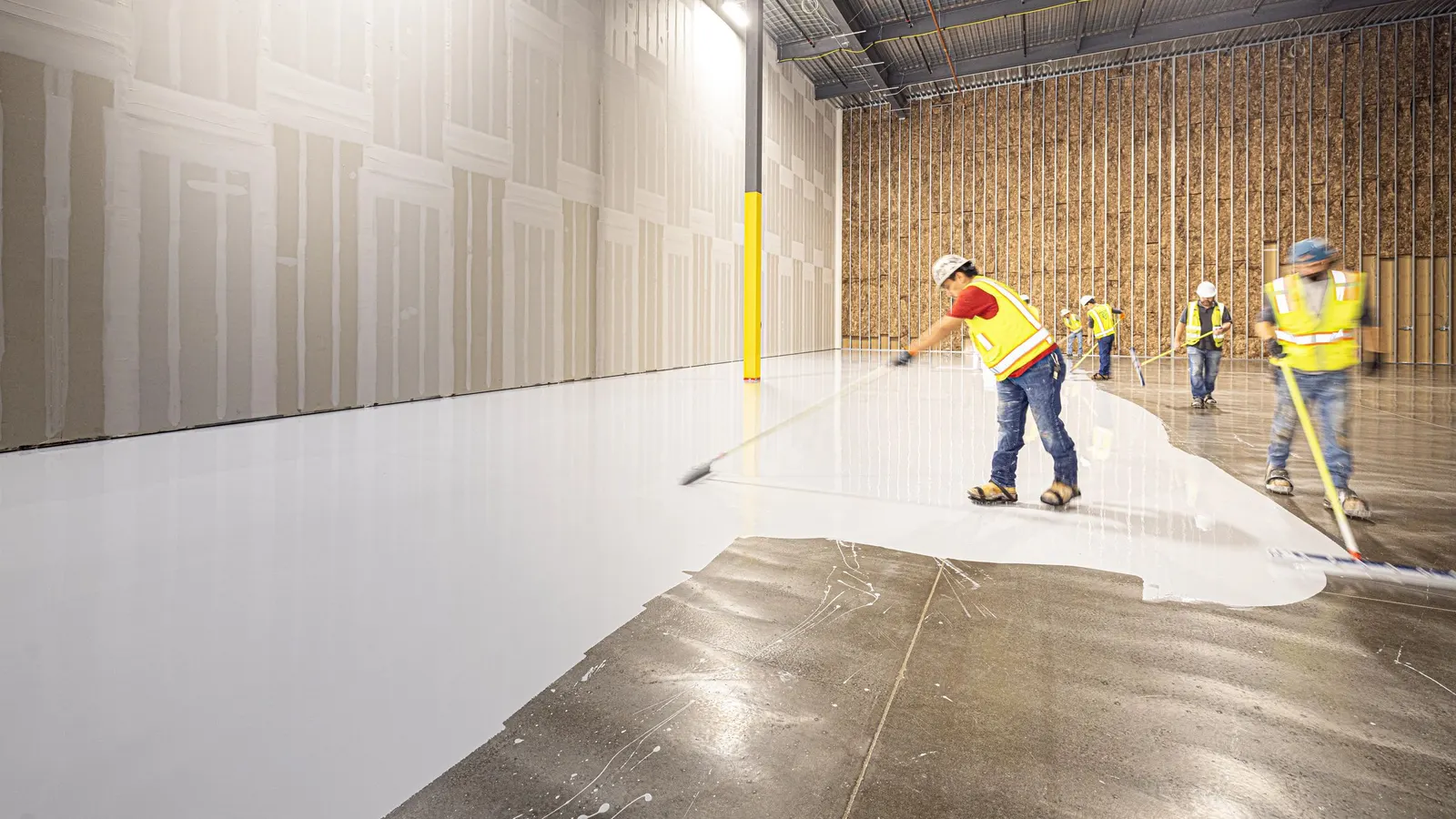
The typical epoxy garage floor cost is $4 to $10 per square foot installed, according to HomeGuide. For a common 2-car garage, that adds up to $1,600 to $5,800. Where your project lands depends mostly on the size of the floor, the condition of the concrete and the epoxy system you choose.
Last reviewed and updated: October 2, 2026. Written by Jeremy Jarvis.
Key takeaways
- HomeGuide puts epoxy garage floor cost at $4 to $10 per square foot installed, or $1,600 to $5,800 for a 2-car garage.
- Materials run $1 to $5 per square foot and labor $3 to $5 per square foot, so prep-heavy jobs cost more.
- Crack repair, resurfacing and moisture treatment can add hundreds or thousands of dollars before coating starts.
- DIY materials cost $50 to $600, or $200 to $700 for premade kits, plus tool rental and your time.
This guide breaks down epoxy garage floor cost by square foot and garage size, separates materials from labor, and explains the prep and repair extras that change real quotes. It also compares professional and DIY costs. To estimate product quantities for your floor, try the free Epoxy Floor Coverage Calculator.
Epoxy garage floor cost at a glance
HomeGuide’s epoxy flooring data gives these headline numbers for professional installation:
| Measure | Typical cost (HomeGuide) |
|---|---|
| Per square foot, installed | $4 – $10 |
| Materials per square foot | $1 – $5 |
| Labor per square foot | $3 – $5 |
| 2-car garage, installed | $1,600 – $5,800 |
| DIY raw materials | $50 – $600 |
| DIY premade kits | $200 – $700 |
These are national ranges based on research and project costs reported by HomeGuide members. Therefore, local labor rates and your slab’s condition will move your number up or down.
Epoxy garage floor cost by garage size
Above all, floor area drives the total. HomeGuide breaks down the installed cost by garage size like this:

Free download: The Garage Makeover Planner
Our 12-page printable planner: garage profile, measurements and layout grid, declutter tracker, zone plan, floor chooser, door safety checks, budget worksheet and order of work.
| Garage | Square feet | Installed cost (HomeGuide) |
|---|---|---|
| 1-car | 288 – 392 | $1,200 – $3,900 |
| 2-car | 400 – 576 | $1,600 – $5,800 |
| 3-car | 576 – 864 | $2,300 – $8,600 |
Small garages can cost more per square foot, because the installer’s setup, travel and equipment costs are spread over less area. Conversely, larger floors often get a slightly lower rate per foot. To find your area, multiply the inside length by the width and subtract any areas you will not coat, such as under fixed cabinets.
Epoxy floor cost: materials vs labor
HomeGuide puts epoxy resin at $1 to $5 per square foot for materials and $3 to $5 per square foot for labor. In other words, labor is often the larger share of an epoxy garage floor cost. That makes sense: grinding, repairing, cleaning and applying several coats is slow, skilled work.
HomeGuide’s broader garage floor coating data shows the same pattern, with materials at $1 to $6 and labor at $3 to $6 per square foot. As a result, a quote that seems cheap may be cutting time on prep, which is exactly where floors fail.
How the epoxy type changes the price
Next, the product itself matters. HomeGuide lists water-based epoxy at $40 to $100 per gallon, solvent epoxy at $50 to $100 per gallon and solid epoxy at $70 to $150 per gallon. It notes that water-based epoxy is easy to apply but less durable, solvent epoxy is durable but banned in some states, and solid epoxy is hard to apply but has a long lifespan.
HomeGuide also says solid epoxy typically costs more to apply than water-based. The extra cost buys life: solid epoxy is durable enough to last 10 to 20 years, while water-based epoxy may need a new coat every 3 to 5 years. Therefore, a cheaper water-based floor may cost more over a decade if it needs recoating twice.
Finishes that add to epoxy floor cost
In addition, decorative choices add to the base price. HomeGuide notes that adding rock pebbles, colored flakes, metallic tint or custom images to an epoxy floor costs extra. A full flake broadcast uses more material and labor than a partial sprinkle, and metallic systems take more skill to apply.
A clear top coat over the color layer adds cost too, but it also adds protection. Many installers now use a polyaspartic top coat for its faster cure and better resistance to sunlight. Ask each installer what top coat is included and how many coats in total the price covers.
Prep and repair extras that raise epoxy cost
Of all the line items, prep is where quotes diverge most. Most professional jobs include diamond grinding and basic crack filling in the per-square-foot price. However, damaged or contaminated floors need more work, and that work is often priced separately.
HomeGuide’s garage floor repair data shows how these extras add up. Minor crack repair costs $200 to $1,000. Hairline cracks under ⅛ inch wide are cosmetic issues typically fixed with polymer-modified cement grout, silicone caulk or epoxy sealant, while structural cracks wider than ⅛ inch require more extensive repairs. Contractors charge $50 to $100 per hour plus materials for structural crack repair.
Spalling, meaning flaking or disintegrating concrete, costs $500 to $3,000 or more to repair, HomeGuide says. Larger structural issues, uneven floors or sinking concrete may require resurfacing or full replacement at $2,500 to $7,000 or more. Its coating data puts concrete resurfacing at $3 to $7 per square foot for major damage. Oil-soaked areas may also need extra degreasing before any coating can bond.
Moisture testing and treatment
Moisture in the slab is a leading cause of coating failure, so many installers test before quoting. HomeGuide’s polyurea coating data notes that testing may add $50 to $300, or more if the concrete requires hardening treatments or a moisture barrier.
In most cases, that small cost is worth paying. A coating that peels in a year costs far more to remove and redo than a test and a moisture-tolerant primer. If the installer does not mention moisture at all, ask how they check for it. Our epoxy garage floor guide explains the common test methods.
What a DIY epoxy garage floor really costs
At first glance, DIY is the cheapest route. HomeGuide lists DIY epoxy flooring at $50 to $600 for raw materials, depending on the size of the project, or $200 to $700 for premade kits. That is a fraction of a professional epoxy garage floor cost.
Still, the materials are only part of the bill. A proper DIY job also needs a rented floor grinder or etching supplies, a shop vacuum, crack filler, degreaser, rollers, spiked shoes, a respirator and other safety gear. Plan for a full weekend or longer, plus cure time when the garage cannot be used. Our step-by-step epoxy guide lists every tool and stage.
Kits also vary in quality, so read the label closely. Many entry-level kits use water-based epoxy that builds a thin film. That can look good at first but may need recoating sooner than a professional solid epoxy system.
Professional vs DIY: which costs less overall?
For a sound, dry slab and a careful owner, DIY can deliver good value. Water-based epoxy is relatively easy to work with, according to HomeGuide, and it is ready for a second coat in 8 to 10 hours.
However, professionals bring industrial grinders, dust extraction, experience with fast-setting products and a warranty. HomeGuide notes that solid epoxy should be handled by professionals to avoid costly mistakes. If your floor has moisture issues, wide cracks or old coatings, the professional route usually costs less in the long run, because the floor is far less likely to fail.
Epoxy vs other coatings on cost
In general, epoxy is the least expensive of the three main coating types. HomeGuide lists epoxy at $4 to $10 per square foot, polyurea at $5 to $10 and polyaspartic at $5 to $12. For a 2-car garage, that means $1,600 to $5,800 for epoxy, $2,000 to $5,800 for polyurea and $2,000 to $6,900 for polyaspartic.
The faster cure and longer life of polyurea and polyaspartic can justify the higher price, especially for busy households that cannot leave the garage empty for a week. Our polyaspartic floor coating guide compares them in detail.
Long-term value of the investment
Equally important, think about cost per year as well as the upfront price. A floor that lasts many years at a higher price can beat a cheaper floor that needs recoating every few years. Likewise, a coating that protects the slab from salt and oil may avoid concrete repairs later.
Beyond the numbers, there are softer benefits too. A coated floor is brighter, easier to clean and nicer to work on. For many owners, that daily improvement is the main reason to pay the epoxy garage floor cost, rather than any calculation.
Regional and seasonal price differences
National ranges hide real regional gaps. Labor rates in large metro areas are usually higher than in rural areas, and labor is the bigger share of the bill. As a result, the same floor can cost noticeably more in one city than in another. Travel distance matters too, since installers spread their setup time across the job.
Season also plays a part. Most coatings need the slab and air within a certain temperature range to cure properly. Consequently, installers in cold regions often have a shorter working season, and demand peaks in spring and early autumn. If your schedule is flexible, ask whether a quieter month brings a better price or an earlier start date.
A sample budget for a 2-car garage
A simple budget helps you read quotes. Start with the floor area and HomeGuide’s installed range of $4 to $10 per square foot. Then add a line for any crack repair beyond what the installer includes; HomeGuide puts minor crack repair at $200 to $1,000. Next, add moisture testing if it is not included, which HomeGuide says may add $50 to $300.
Finally, set aside a small contingency for surprises, such as old sealer that needs extra grinding or an oil-soaked corner. With those lines in place, a quote that seems high or low becomes much easier to judge. In other words, the budget turns a single number into a checklist of the work you are paying for.
How to compare epoxy quotes
Get at least three written quotes, and ask each installer to itemize the same parts of the job. That way, you compare the work, not just the total.
- Square footage measured and included.
- Prep method: diamond grinding, shot blasting or etching.
- Crack, pit and spall repair included, and at what rate beyond that.
- Moisture testing and any primer or barrier.
- Product type, brand and number of coats.
- Flake coverage and top coat type.
- Cure time before walking and before parking.
- Warranty length and what it covers.
In short, a detailed quote is a good sign. Vague quotes that list only a price per square foot leave room for surprises.
Ways to lower your epoxy garage floor cost
First, clear the garage completely yourself, since some installers charge for moving items. Second, choose a partial flake broadcast instead of full coverage if you like the look. Third, combine the floor with other garage work so the space is empty only once.
Also, repair small cracks before winter rather than after they spread. Finally, ask about off-season scheduling, which may bring more flexible pricing. For more floor options and guides, visit the Garage Floors hub, and compare garage floor epoxy kits if you plan to do it yourself.
Frequently asked questions about epoxy garage floor cost
How much does it cost to epoxy a garage floor?
HomeGuide lists epoxy garage floor cost at $4 to $10 per square foot installed. That works out to $1,200 to $3,900 for a 1-car garage, $1,600 to $5,800 for a 2-car garage and $2,300 to $8,600 for a 3-car garage.
Is it cheaper to epoxy a garage floor yourself?
Yes, up front. HomeGuide lists DIY epoxy at $50 to $600 for raw materials or $200 to $700 for premade kits. Add grinder rental, crack filler and safety gear, and remember that poor prep can mean redoing the floor sooner.
Why do epoxy garage floor quotes vary so much?
Quotes differ mainly on prep and product. Grinding, crack repair, moisture treatment, the epoxy type, the number of coats and decorative flakes all change the price. Ask each installer for an itemized quote so you can compare like with like.
How much does garage floor crack repair add?
HomeGuide lists minor garage floor crack repair at $200 to $1,000. Larger structural issues, uneven floors or sinking concrete may require resurfacing or replacement at $2,500 to $7,000 or more for an average garage.
Is polyaspartic more expensive than epoxy?
Usually, yes. HomeGuide lists epoxy at $4 to $10 per square foot and polyaspartic at $5 to $12 per square foot. Polyaspartic cures in 1 to 2 days rather than up to a week, which some owners feel is worth the higher price.
Sources and how we researched this guide
This guide is research-based. We did not collect our own quotes; the prices come from HomeGuide’s published epoxy flooring, garage floor coating and garage floor repair cost data. Local prices vary with slab condition and region, so compare itemized written quotes. Found something out of date? Tell us and we will check it against the source.
- HomeGuide: Epoxy flooring cost
- HomeGuide: Garage floor coating cost
- HomeGuide: Garage floor repair cost
Keep planning
- Standard Garage Door Sizes: Single, Double and How to Measure
- Polyaspartic Floor Coating: Cost, Lifespan and vs Epoxy
- How to Epoxy a Garage Floor: Step-by-Step DIY Kit Guide
- Garage Ventilation Fan: Types, Sizing and Placement Guide
Go deeper: Tools directory · Garage Makeover Plan Builder

Written by Jeremy Jarvis
Jeremy Jarvis is the founder and editor of Garage Playbook, where he builds research-based guides and free planning tools for garage doors, floors, storage, heating and cooling, and workshops. He sets the site's editorial standards, checks every guide against official sources such as federal safety standards, EPA and OSHA guidance and manufacturer documentation, and is responsible for corrections. Jeremy also founded Eco Nomad Travel, Mind Clarity Hub, SilkHarborTravel, WanderOza Travel, Freedom Road Living and PowerProof Home, and he is the author of books on clarity, focus and practical AI, including The Power of Clarity and Digital Clarity.