
Epoxy Garage Floor: Types, Costs, Prep and Lifespan
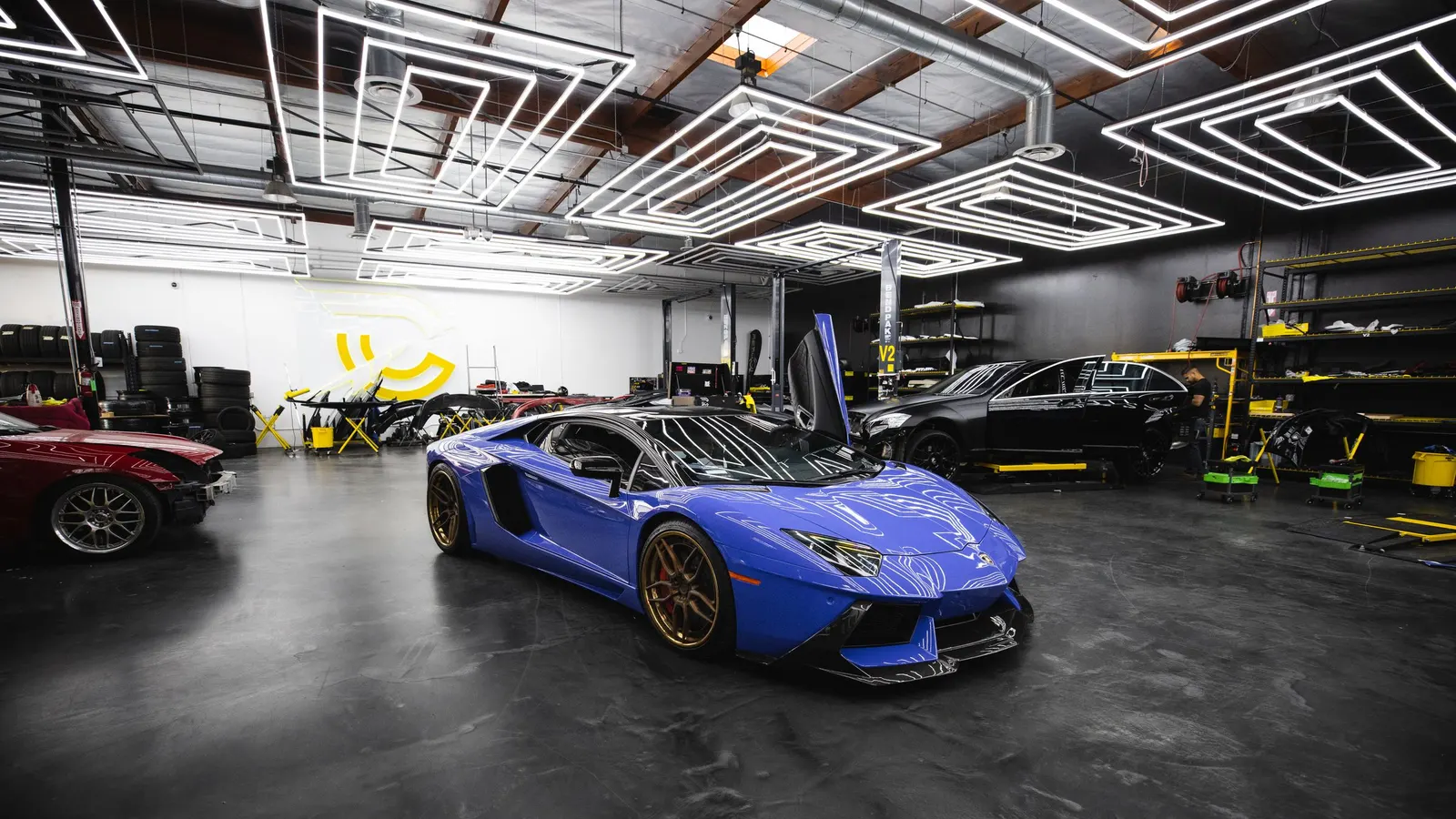
An epoxy garage floor turns plain gray concrete into a smooth, colored surface that wipes clean and resists oil, road salt and wear. It is one of the most popular garage upgrades because it changes how the whole space looks and feels. However, epoxy only performs well on concrete that is dry, clean and properly prepared.
Last reviewed and updated: October 2, 2026. Written by Jeremy Jarvis.
Key takeaways
- An epoxy garage floor is a resin coating that bonds to concrete and resists stains, chemicals and wear.
- HomeGuide puts epoxy at $4 to $10 per square foot, or $1,600 to $5,800 for a 2-car garage, installed.
- Solid epoxy can last 10 to 20 years, while water-based epoxy may need a new coat every 3 to 5 years.
- Moisture in the slab is a leading cause of failure, so test the concrete and prepare it properly before coating.
This guide explains how an epoxy garage floor works, the main types of epoxy, what it costs, how long it lasts and why moisture testing matters so much. It also compares epoxy with polyaspartic and polyurea coatings. To estimate how much product your floor needs, use the free Epoxy Floor Coverage Calculator.
What an epoxy garage floor is
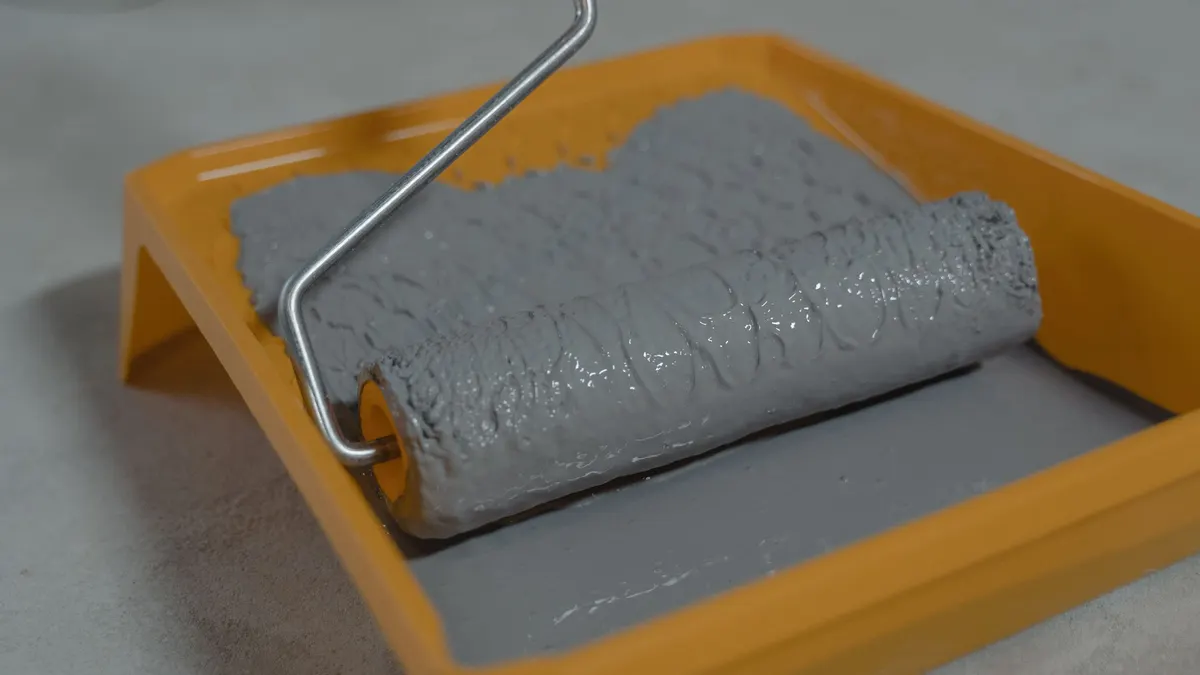
Epoxy is a two-part resin system. When the resin and hardener are mixed, they react and cure into a hard plastic layer. Applied to concrete, that layer bonds into the surface pores and forms a tough, sealed coating.
Strictly speaking, an epoxy garage floor is a coating, not a paint. Paint sits on top of the concrete and dries as solvents evaporate. By contrast, epoxy cures chemically and builds a thicker film. That difference is why epoxy resists hot tire pickup, chemicals and abrasion far better than ordinary floor paint.
Benefits of an epoxy garage floor
Owners usually choose epoxy for a mix of practical and visual reasons. The coating seals bare concrete, so oil, antifreeze and road salt sit on the surface instead of soaking in. As a result, spills wipe up with a mop rather than staining the slab permanently.

Free download: The Garage Makeover Planner
Our 12-page printable planner: garage profile, measurements and layout grid, declutter tracker, zone plan, floor chooser, door safety checks, budget worksheet and order of work.
Epoxy also brightens the garage. A light-colored, glossy floor reflects overhead light, which makes the space feel larger and helps when you are working on projects. In addition, a coated floor sheds less concrete dust, which keeps tools, cars and storage cleaner.
Finally, an epoxy garage floor can add a finished look that suits a garage used as a gym, hobby room or showroom. Decorative flakes or metallic tints let you match the style to the rest of the home.
Drawbacks to know before you commit
Epoxy is not perfect, and knowing its limits prevents disappointment. First, prep is demanding. The concrete usually needs grinding, crack repair and thorough cleaning before any coating goes down. Shortcuts here are the main reason floors peel.
Second, some epoxies yellow or fade in strong sunlight, especially near an open garage door. Third, a glossy coating can be slippery when wet unless an anti-slip additive or flake broadcast is used. Lastly, a full cure can take days, so the garage is out of service while it hardens. HomeGuide notes epoxy takes up to 1 week to cure.
Types of epoxy for garage floors
Not all epoxy is the same. HomeGuide groups floor epoxy into three main types, each with its own cost, handling and durability.
| Epoxy type | Cost per gallon (HomeGuide) | Notes |
|---|---|---|
| Water-based | $40 – $100 | Easy to apply but less durable |
| Solvent-based | $50 – $100 | Durable and dries faster, but banned in some states |
| Solid (100% solids) | $70 – $150 | Hard to apply but has a long lifespan |
Water-based epoxy is common in DIY kits because it is forgiving and has fewer fumes. Solid epoxy builds the thickest, toughest film, but it sets quickly and is best left to experienced installers. Solvent-based epoxy sits in between, although local rules on solvents may limit its use.
Finishes: solid color, flakes and metallic
The look of an epoxy garage floor comes from the finish. A solid color is the simplest and often the most affordable. Meanwhile, decorative flakes, also called chips, are broadcast into the wet base coat. They hide small imperfections, add texture for grip and make dirt less visible.
Metallic epoxy uses pigments that swirl to create a marbled, high-gloss effect. It looks striking, but it shows every flaw in the slab and takes skill to apply evenly. HomeGuide notes that adding rock pebbles, colored flakes, metallic tint or custom images to an epoxy floor costs extra.
For most busy garages, a full or partial flake broadcast with a clear top coat is the practical favorite. It balances looks, grip and easy cleaning.
Epoxy garage floor cost
HomeGuide puts a professionally installed epoxy garage floor at $4 to $10 per square foot, or $1,600 to $5,800 for a typical 2-car garage. Of that, epoxy resin runs $1 to $5 per square foot for materials and $3 to $5 per square foot for labor.
| Garage size | Square feet | Installed cost (HomeGuide) |
|---|---|---|
| 1-car | 288 – 392 | $1,200 – $3,900 |
| 2-car | 400 – 576 | $1,600 – $5,800 |
| 3-car | 576 – 864 | $2,300 – $8,600 |
DIY costs much less up front. HomeGuide lists DIY epoxy flooring at $50 to $600 for raw materials, or $200 to $700 for premade kits. However, grinder rental, crack filler, cleaning products and safety gear add to that. For a complete breakdown, see our epoxy garage floor cost guide.
How long an epoxy garage floor lasts
Lifespan varies widely with the product and the prep. HomeGuide says epoxy lasts 3 to 20 years overall. Specifically, solid epoxy is durable enough to last 10 to 20 years, while water-based epoxy may need a new coat every 3 to 5 years.
Several factors shorten that life. Moisture pushing up through the slab can lift the coating. Hot tires can soften and pull up thin coatings. Heavy dragging of tool chests and jacks scratches the surface. In contrast, a well-ground slab, a thick solid base coat and a durable top coat give the best chance at the long end of the range.
Moisture: the hidden cause of failure
Concrete slabs on the ground breathe moisture. ASTM F1869 states that all concrete subfloors emit some amount of moisture in vapor form, and that all floor coverings are susceptible to failure from excessive moisture vapor emissions. In a garage, that moisture can collect under an epoxy layer and push it loose.
Two simple test methods help. ASTM D4263, the plastic sheet method, is used to indicate the presence of capillary moisture in concrete. You tape a square of plastic to the floor and check for condensation underneath after a set period. ASTM F1869 uses anhydrous calcium chloride to measure the moisture vapor emission rate, expressed as the weight of water evaporating from 1,000 square feet of concrete in 24 hours.
Results only reflect the slab at the time of testing, as F1869 notes. Even so, a failed plastic sheet test is a clear warning. In that case, ask about moisture-tolerant primers or choose a floor option such as interlocking tiles instead.
Surface preparation makes or breaks it
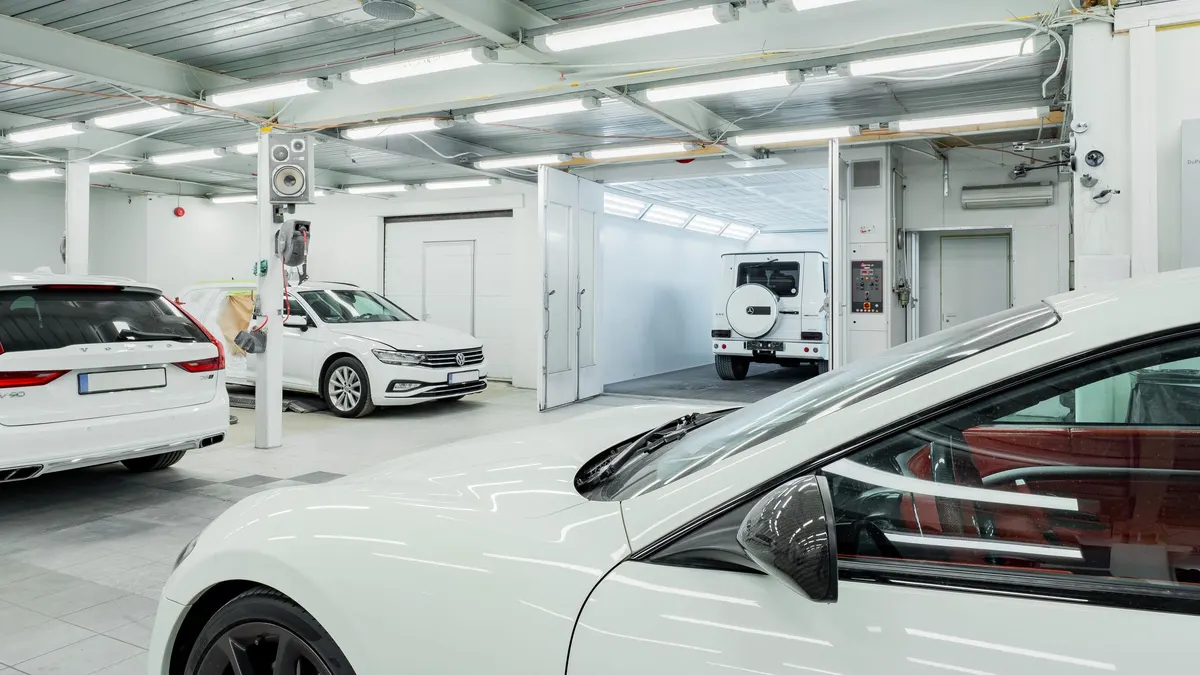
Good prep gives epoxy something to grip. Professionals usually diamond-grind the slab to open the pores and remove old sealers, paint and laitance. Acid etching is a cheaper DIY alternative, but it is less consistent and does not remove sealers or coatings.
After grinding, cracks and pits are filled and ground flush. Next, the floor is vacuumed thoroughly to remove dust. Oil stains must be degreased, since epoxy will not bond to oil. Finally, the slab must be dry, and the air and floor temperatures must be within the product’s range. Our step-by-step guide to epoxy a garage floor covers each stage in detail.
Ventilation and fumes
Coatings release vapors while they are applied and cured. EPA notes that paints, varnishes and wax all contain organic solvents, and it advises increasing ventilation when using products that emit volatile organic compounds. It also reports that during and for several hours after certain activities, such as paint stripping, indoor levels may be 1,000 times background outdoor levels.
Therefore, keep the garage door open where weather allows, run fans that exhaust air outdoors, and keep children and pets away. Wear the respirator, gloves and eye protection listed on the product’s safety data sheet. Also, close any door into the house and turn off nearby pilot lights when solvent products are in use.
DIY epoxy or a professional installer
A DIY epoxy garage floor can look good and save a lot of money, especially with a quality kit and careful prep. HomeGuide notes that water-based epoxy is relatively easy to work with and is ready for a second coat in 8 to 10 hours.
On the other hand, solid epoxy and fast-curing top coats are hard to apply evenly, and HomeGuide says solid epoxy should be handled by professionals to avoid costly mistakes. Professionals also own industrial grinders and dust extraction, which produce a better profile than rental tools. If your slab has moisture problems, wide cracks or old coatings, a pro is usually the safer choice.
Epoxy vs polyaspartic and polyurea
Epoxy is no longer the only option. HomeGuide compares the three main coating types like this:
| Coating | Cost per sq ft | Lifespan | Cure time |
|---|---|---|---|
| Epoxy | $4 – $10 | 3 to 20 years | Up to 1 week |
| Polyurea | $5 – $10 | 10 to 20+ years | 1 day |
| Polyaspartic | $5 – $12 | 10 to 20+ years | 1 to 2 days |
Polyaspartic and polyurea cure much faster and generally resist sunlight better, which is why many pros now use them as top coats over an epoxy base. Our polyaspartic floor coating guide explains those systems in detail.
Caring for an epoxy garage floor
Routine care is simple. Sweep or dust-mop regularly, since grit acts like sandpaper under tires and shoes. Then wash with a mild cleaner and a soft mop. Avoid harsh acids and abrasive pads that dull the finish.
HomeGuide suggests that to keep an epoxy garage floor clean and glossy, you should keep the door closed as much as possible and place mats near entrance and exit points. In addition, use furniture pads under heavy items and a plywood sheet under jack stands. In winter, rinse road salt off regularly so it does not sit on the surface.
Is an epoxy garage floor right for you?
An epoxy garage floor makes the most sense when the slab is sound and reasonably dry, the garage sees daily use, and you value easy cleaning and a bright finish. It is also a natural step when you are turning the garage into a workshop or gym.
However, if the slab fails a moisture test, has major cracks or heaves, or you rent the home, consider alternatives such as tiles or mats. Weigh the prep effort honestly too, since it decides how long the floor lasts. For more floor options, visit the Garage Floors hub, and compare epoxy garage floor kits and concrete moisture test kits before you start.
Frequently asked questions about epoxy garage floors
Is an epoxy garage floor worth it?
An epoxy garage floor is usually worth it if the garage is used often, sees oil and road salt, or doubles as a workshop or gym. It makes concrete easier to clean and brighter. It is less worthwhile on a damp, cracked slab that has not been tested and repaired first.
How long does an epoxy garage floor last?
HomeGuide says solid epoxy is durable enough to last 10 to 20 years, while water-based epoxy may need a new coat every 3 to 5 years. Prep quality, slab moisture, traffic and hot tires all affect real-world life.
How much does an epoxy garage floor cost?
HomeGuide lists epoxy garage floors at $4 to $10 per square foot installed, or $1,600 to $5,800 for a typical 2-car garage. DIY materials run $50 to $600, or $200 to $700 for premade kits.
Can you epoxy a garage floor yourself?
Yes, many homeowners apply water-based or kit epoxy themselves. HomeGuide notes water-based epoxy is relatively easy to work with, but solid epoxy should be handled by professionals to avoid costly mistakes. Grinding and moisture testing are the hardest parts to get right.
Is polyaspartic better than epoxy for a garage floor?
Polyaspartic cures faster and, according to HomeGuide, lasts 10 to 20 years or more compared with 3 to 20 years for epoxy. It also costs more, at $5 to $12 per square foot. Many installers combine an epoxy base coat with a polyaspartic top coat.
Sources and how we researched this guide
This guide is research-based. We did not coat floors for this article; we used HomeGuide’s published epoxy and garage floor coating cost data, the ASTM D4263 and F1869 concrete moisture test methods, and EPA guidance on volatile organic compounds. Follow the coating maker’s instructions for prep, ventilation and cure times. Found something out of date? Tell us and we will check it against the source.
- HomeGuide: Garage floor coating cost
- HomeGuide: Epoxy flooring cost
- ASTM D4263: Indicating moisture in concrete by the plastic sheet method
- ASTM F1869: Moisture vapor emission rate using anhydrous calcium chloride
- EPA: Volatile organic compounds’ impact on indoor air quality
Keep planning
- Polyaspartic Floor Coating: Cost, Lifespan and vs Epoxy
- How to Epoxy a Garage Floor: Step-by-Step DIY Kit Guide
- Garage Floor Tiles: Types, Costs and How to Install Them
- Garage Floor Paint: Types, Prep and When to Choose Coating
Go deeper: Garage Floors hub · Epoxy Floor Coverage Calculator · Garage Floor Tile Calculator

Written by Jeremy Jarvis
Jeremy Jarvis is the founder and editor of Garage Playbook, where he builds research-based guides and free planning tools for garage doors, floors, storage, heating and cooling, and workshops. He sets the site's editorial standards, checks every guide against official sources such as federal safety standards, EPA and OSHA guidance and manufacturer documentation, and is responsible for corrections. Jeremy also founded Eco Nomad Travel, Mind Clarity Hub, SilkHarborTravel, WanderOza Travel, Freedom Road Living and PowerProof Home, and he is the author of books on clarity, focus and practical AI, including The Power of Clarity and Digital Clarity.