
Dust Collector Guide: Sizing, Filters and Garage Shop Setup

A dust collector is the backbone of a clean, healthy garage woodshop. Table saws, planers, jointers and sanders throw out chips and fine dust that coat every surface and hang in the air. A good dust collector captures much of that mess at the source, protecting your lungs, your tools and the rest of the house.
Last reviewed and updated: October 2, 2026. Written by Jeremy Jarvis.
Key takeaways
- A dust collector moves large volumes of air to capture chips and dust from saws, planers and jointers.
- OSHA notes wood dust becomes a potential health problem when particles from sanding and cutting become airborne.
- Fine filtration, good hoods and short, smooth ducts matter as much as the collector’s motor.
- Combine source capture with an air cleaner, ventilation and a respirator for the finest dust.
This guide explains why wood dust matters, how a dust collector differs from a shop vac, and how to choose airflow and filtration. It also covers ducting, blast gates, air cleaners, noise and safety. For smaller tools and general cleanup, see our shop vac guide.
Why wood dust matters
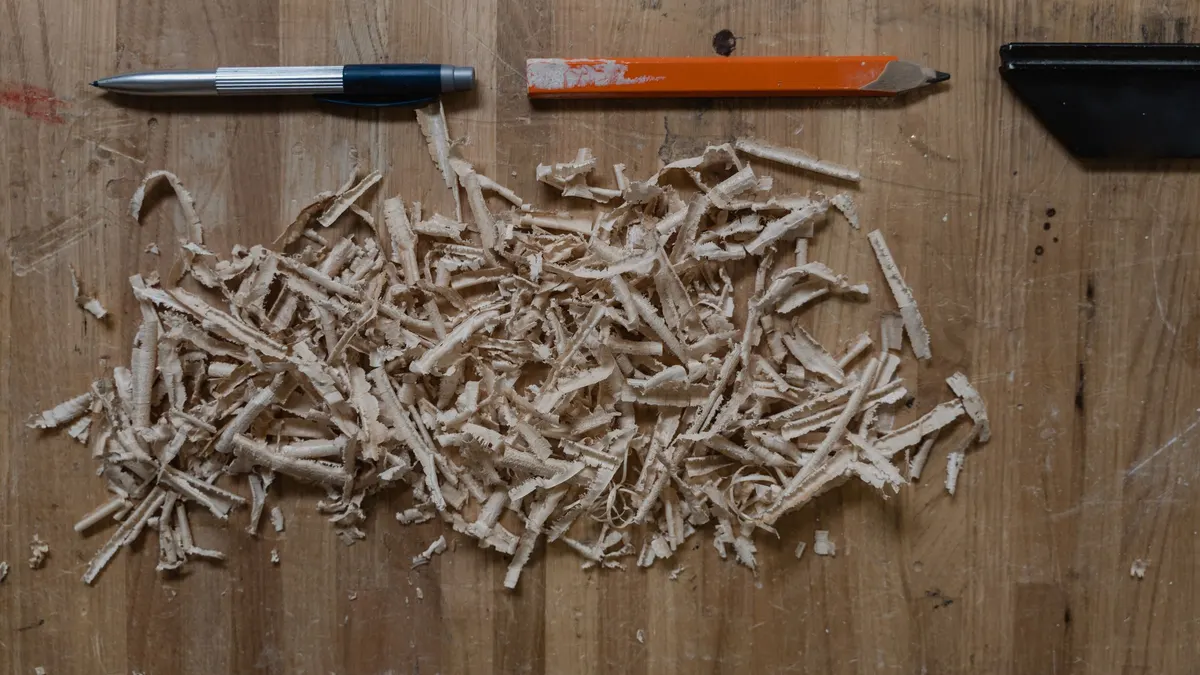
Wood dust is more than a nuisance. OSHA notes that wood dust becomes a potential health problem when wood particles from processes such as sanding and cutting become airborne. Its woodworking eTool adds that wood dust and the chemicals used for finishing products are health hazards to wood workers and may cause skin and respiratory diseases.
In a garage, dust also spreads beyond the shop. It settles on cars, stored items and, in attached garages, can drift into the house. Furthermore, fine dust coats machine motors and electrical parts. For all these reasons, controlling dust at the source is one of the best investments a home woodworker can make.
Dust collector vs shop vac
Both tools move air, but they do it differently. A shop vac moves a relatively small volume of air at high suction, which suits narrow hoses and small tool ports. That makes it ideal for sanders, routers, track saws and general cleanup.

Free download: The Garage Makeover Planner
Our 12-page printable planner: garage profile, measurements and layout grid, declutter tracker, zone plan, floor chooser, door safety checks, budget worksheet and order of work.
By contrast, a dust collector moves a large volume of air at lower suction through wide hoses. That suits machines that produce lots of chips, such as table saws, planers, jointers and bandsaws. As a result, many garage shops use both: a shop vac for small tools and a dust collector for the big machines.
Types of dust collector
Several designs suit home shops, from compact mobile units to full cyclone systems.
| Type | How it works | Best for |
|---|---|---|
| Single-stage collector | Air and chips pass through the impeller into a bag or canister filter | Small shops, one machine at a time |
| Two-stage cyclone | A cyclone drops most debris into a bin before the filter | Serious hobbyists, ducted systems |
| Mobile collector | Wheeled unit moved between machines | Small garages and shared spaces |
| Shop vac with cyclone separator | Separator catches debris ahead of the vac | Small tools and light woodworking |
| Ambient air cleaner | Ceiling-hung fan and filters clean room air | Fine dust that escapes capture |
For many garage shops, a mobile single-stage collector with a fine canister filter is a practical start. Meanwhile, a two-stage cyclone suits larger shops with ducting to several machines.
Airflow: the number that matters
Dust collectors are rated by airflow, usually in cubic feet per minute. However, the rated figure is often measured without hoses or filters. In real use, every foot of hose, every bend and the filter itself reduce airflow. That is why a collector that looks powerful on paper may struggle at the end of a long duct.
Start with your machines. Check each one’s dust port size and the airflow its maker recommends. Then consider how you will connect them: a short hose to one machine at a time needs far less capacity than a ducted system with long runs. Size the collector for the largest machine you will run, plus the losses in your hoses and ducts.
Filtration and fine dust
A collector that blows fine dust out through a coarse filter can make air quality worse. The fine particles that are hardest to see are the ones that stay airborne longest. Therefore, filtration matters as much as airflow.
Look for fine-rated canister filters rather than coarse cloth bags. Pleated canisters offer more filter area, which keeps airflow up as they load. Clean them as the maker directs, often with a built-in paddle or by brushing, and replace them when they no longer recover. Additionally, check that the collector and connections are sealed, since leaks let fine dust escape.
Cyclone separators
A cyclone spins incoming air so that heavy chips and much of the dust drop into a bin before reaching the filter. As a result, filters stay cleaner, airflow stays steadier and emptying is easier. Two-stage cyclone collectors build this in, while add-on cyclone separators work with smaller collectors and shop vacs.
Cyclones take some height and floor space, so measure your garage first. Even so, many woodworkers consider them worth the space for the consistent performance they provide.
Ducting and hoses
Ducts and hoses connect the collector to your machines, and their design has a huge effect on performance. Keep runs as short and straight as possible. Use smooth-walled duct for long runs, since flexible hose creates more resistance. Where bends are needed, use gentle sweeps rather than sharp elbows.
Seal every joint so air enters only at the machine, not through gaps along the way. In addition, ground or bond ducting as recommended for your materials, since moving dust can build static. Finally, plan the layout so the busiest machines sit closest to the collector.
Blast gates
In a ducted system, blast gates control which branch is open. Close the gates on machines you are not using, and open only the one you are working at. That concentrates the collector’s airflow where it is needed.
Gates are inexpensive and easy to install. Some woodworkers add automatic gates that open when a machine starts, which removes the chance of forgetting.
Hoods and capture at the machine
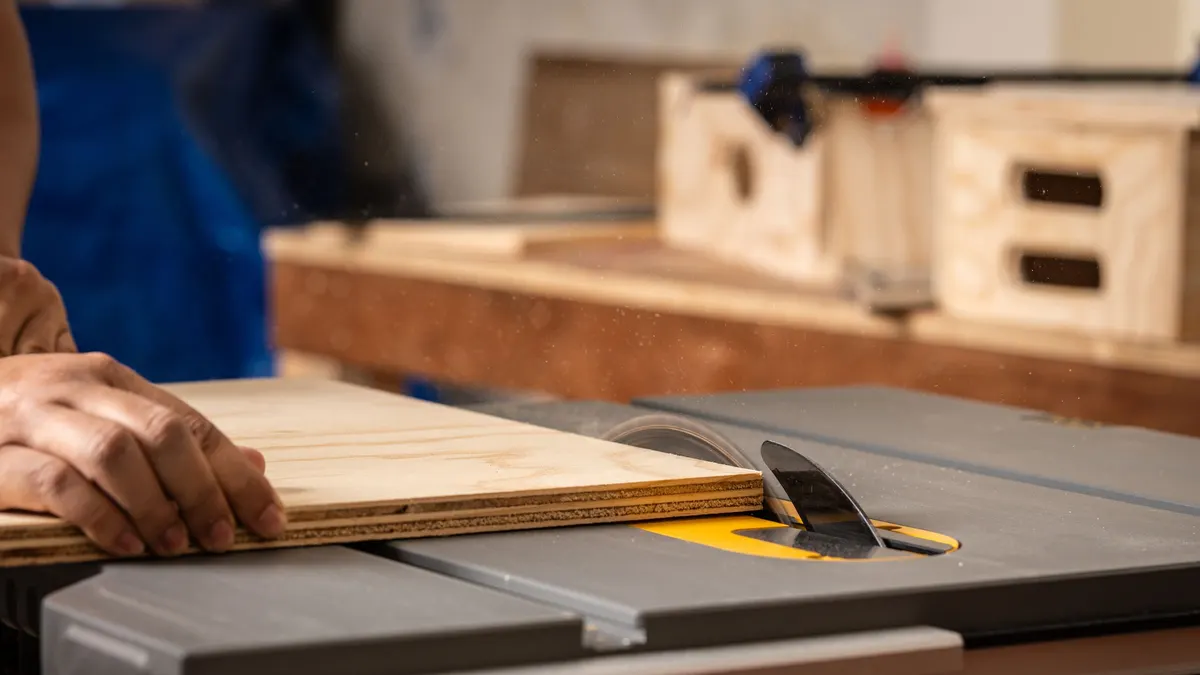
Even a powerful collector misses dust if the machine’s port and hood capture it poorly. Some tools have small or awkward ports that waste airflow. Upgrading a table saw with an over-blade guard that has its own dust port, or improving a sander’s shroud, can make a big difference.
OSHA’s woodworking eTool notes that improperly or inadequately guarded woodworking machines can lead to injuries including laceration, amputation, severed fingers and blindness. When adding dust hoods, never remove or disable blade guards; choose solutions that work with the machine’s safety features.
Air cleaners and ventilation
No collector captures everything. Fine dust escapes from sanding, hand work and machines with poor ports. An ambient air cleaner, hung from the ceiling, filters the room air continuously and catches much of what source capture misses.
Ventilation helps too. EPA explains that inadequate ventilation can increase indoor pollutant levels by not bringing in enough outdoor air to dilute emissions and by not carrying pollutants out. An exhaust fan clears dust and finishing fumes; our garage ventilation fan guide explains how to size one. For the finest dust and for finishing, wear a suitable respirator as well.
Noise
Dust collectors add noise to an already loud shop. OSHA notes that exposure over 85 decibels can damage your hearing, and that if you need to raise your voice to speak to someone 3 feet away, noise levels might be over 85 decibels. Running a collector alongside a table saw or planer makes hearing protection essential.
Placement can help. Putting the collector in a corner or behind a partition, with ducts running to the machines, keeps the noise farther from you. Some owners build a vented enclosure, which must allow enough airflow for the motor to stay cool.
Planning a garage shop layout
In a garage, space is tight and machines often move. A mobile collector rolled to whichever machine is running suits many shops. Alternatively, cluster the big chip producers near one wall, close to a stationary collector, with short ducts.
Think about the car too. If the garage still holds a vehicle, plan where machines and the collector go when parked. Our garage workshop ideas cover layouts that share space with parking.
Safety and housekeeping
Empty bins and bags before they overfill, and keep the area around the collector clean. Never vacuum or collect sparks, hot metal or smoldering material, since fine wood dust is combustible. Keep collectors away from heaters and other ignition sources.
Use suitable respiratory protection when dust is heavy, during emptying and during sanding. Also wear eye and hearing protection while machines run. Finally, follow each maker’s instructions for grounding, filters and maintenance.
Building a dust collection system in stages
You do not need a complete dust collection system on day one. Most home woodworkers build one in stages as their shop grows. First, a shop vac with a cyclone separator handles sanders, routers and a miter saw. Next, a mobile dust collector with a fine canister filter serves the table saw and planer, rolled from machine to machine.
Later, as machines settle into permanent spots, a fixed collector with short ducts and blast gates turns those pieces into a full dust collection system. Finally, an ambient air cleaner catches the fine dust that escapes. Building this way spreads the cost and lets you learn which machines make the most mess before you commit to ducting.
Emptying and maintaining a collector
A collector only works when it has room to collect. Empty the bin or bag before it gets too full, since an overfilled container pushes dust into the filter and cuts airflow. Many collectors have a window or sensor that shows the fill level.
Clean the filter regularly, following the maker’s method, and wear a mask while you do it, since this is when the finest dust becomes airborne. Meanwhile, check hoses and ducts for clogs, especially after planing, when long shavings can jam a bend. Inspect seals and clamps too, because small leaks steadily reduce suction at the machine.
Common dust collection mistakes
The most common mistake is choosing a collector by its advertised airflow without accounting for hoses, ducts and filters. Another is relying on a coarse cloth bag that lets fine dust pass straight through. In addition, long runs of flexible hose and sharp elbows quietly rob the system of airflow.
Some woodworkers leave every blast gate open, which spreads the airflow too thin. Others skip the air cleaner and respirator, assuming the collector catches everything. Finally, placing the collector where its noise sits right beside the operator makes long sessions unpleasant and harder on hearing.
Dust collector checklist
- List your machines and their dust port sizes and airflow needs.
- Use a shop vac for small tools and a dust collector for big machines.
- Choose fine filtration and seal every connection.
- Consider a cyclone to protect the filter and steady airflow.
- Keep ducts short and smooth, with blast gates on each branch.
- Add an air cleaner and ventilation for fine dust.
- Wear respiratory, eye and hearing protection.
Where to compare dust collectors
When you know your airflow needs, compare current dust collectors with canister filters, cyclone separators and ambient air cleaners. Check airflow, filtration and noise on each listing. For more workshop guides, visit the Workshop and Tools hub.
Frequently asked questions about dust collectors
Do I need a dust collector or a shop vac?
A shop vac moves less air at higher suction, which suits small tool ports on sanders and routers. A dust collector moves much more air at lower suction, which suits big chip producers such as table saws, planers and jointers. Many garage shops use both.
What size dust collector do I need?
Size it by the airflow your largest machine needs at its port, plus losses from hoses, ducts and fittings. A single machine connected by a short hose needs far less than a ducted system serving several machines. Check each machine maker’s recommendation.
Do dust collectors capture fine dust?
Only if they have fine filtration and good capture at the tool. OSHA notes wood dust becomes a potential health problem when particles from sanding and cutting become airborne. Choose fine filters, seal leaks and add an air cleaner for dust that escapes.
How do you set up dust collection in a garage?
Place the collector near the machines that make the most chips, keep ducts short and smooth, use blast gates to close unused branches and route exhaust through good filters. A mobile collector moved between machines works well in small garages.
Is a dust collector loud?
Many are. OSHA notes exposure over 85 decibels can damage hearing and that needing to raise your voice to talk to someone 3 feet away suggests levels may be over 85. Wear hearing protection and consider placing the collector away from where you stand.
Sources and how we researched this guide
This guide is research-based. We did not test collectors for this article; we compared common designs and used OSHA guidance on wood dust, woodworking hazards and noise, and EPA guidance on indoor air quality. Follow each maker’s instructions and use suitable respiratory protection for dusty work. Found something out of date? Tell us and we will check it against the source.
- OSHA: Wood dust
- OSHA eTool: Woodworking
- EPA: Introduction to indoor air quality
- OSHA: Occupational noise exposure
Keep planning
- Shop Vac Guide: Sizes, Filters, Wet Pickup and Dust Control
- Rolling Tool Box: Chests, Carts and How to Choose One
- Garage Workshop Ideas: Layouts, Power, Light and Safety
- Garage Workbench: Types, Height, Tops and Setup Ideas
Go deeper: Workshop hub · Garage Lighting Calculator · Air Compressor CFM Calculator

Written by Jeremy Jarvis
Jeremy Jarvis is the founder and editor of Garage Playbook, where he builds research-based guides and free planning tools for garage doors, floors, storage, heating and cooling, and workshops. He sets the site's editorial standards, checks every guide against official sources such as federal safety standards, EPA and OSHA guidance and manufacturer documentation, and is responsible for corrections. Jeremy also founded Eco Nomad Travel, Mind Clarity Hub, SilkHarborTravel, WanderOza Travel, Freedom Road Living and PowerProof Home, and he is the author of books on clarity, focus and practical AI, including The Power of Clarity and Digital Clarity.