
Air Compressor for Garage: CFM, Tank Size and Setup Guide
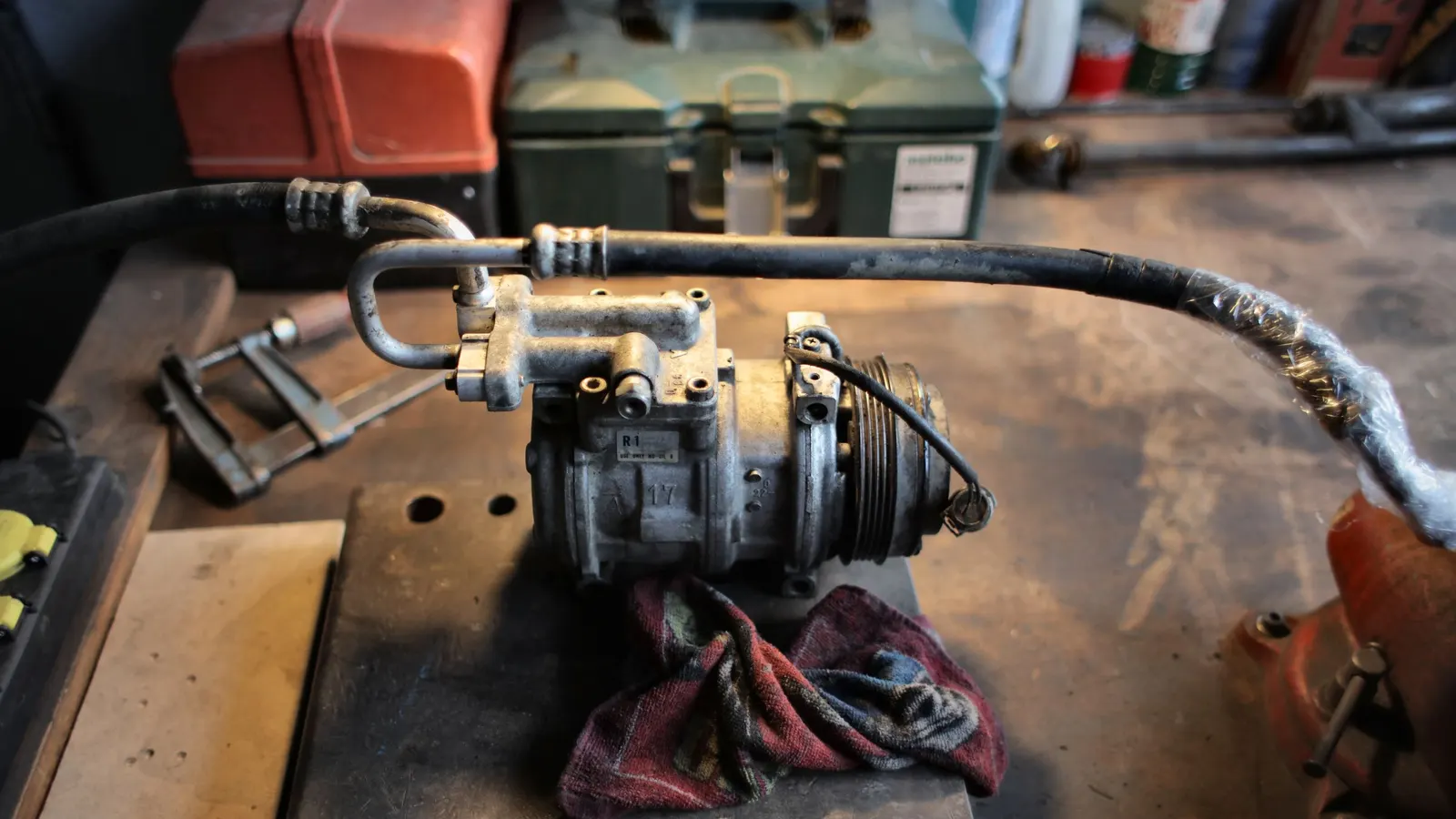
An air compressor for garage use opens up a whole category of tools: tire inflators, blow guns, brad nailers, impact wrenches, ratchets, sanders and paint sprayers. The right compressor runs your tools smoothly, while the wrong one leaves you waiting for the tank to refill every few seconds. The key is matching the compressor’s real airflow to what your tools need.
Last reviewed and updated: October 2, 2026. Written by Jeremy Jarvis.
Key takeaways
- Choose an air compressor for garage use by delivered CFM at 90 PSI, not horsepower or tank size alone.
- Add up the CFM of tools that run at the same time, then add a margin for continuous-use tools.
- A bigger tank smooths short bursts but does not raise sustained airflow.
- Drain the tank, wear hearing and eye protection, and keep cleaning air under 30 psi as OSHA’s workplace rule requires.
This guide explains CFM and PSI, how to size a compressor, and how tank size, duty cycle, compressor style, power and noise affect the choice. It also covers hoses, moisture and safety. To total your tools’ air needs, use the free Air Compressor CFM Calculator.
Start with what you will power
Before comparing any air compressor for garage use, list the air tools you own or plan to buy. Each one has an air requirement, usually printed in its manual as CFM at 90 PSI. Some tools use air in short bursts, while others run continuously.
For example, a tire inflator, blow gun or brad nailer uses little air and works with almost any compressor. By contrast, an impact wrench uses more air in bursts. Meanwhile, sanders, grinders, cut-off tools and paint guns run continuously and need much more. As a result, your most demanding continuous tool usually decides the compressor size.
CFM and PSI explained
Two numbers describe compressed air. PSI, or pounds per square inch, measures pressure. Most air tools are designed to run at about 90 PSI. CFM, or cubic feet per minute, measures volume, meaning how much air flows each minute.
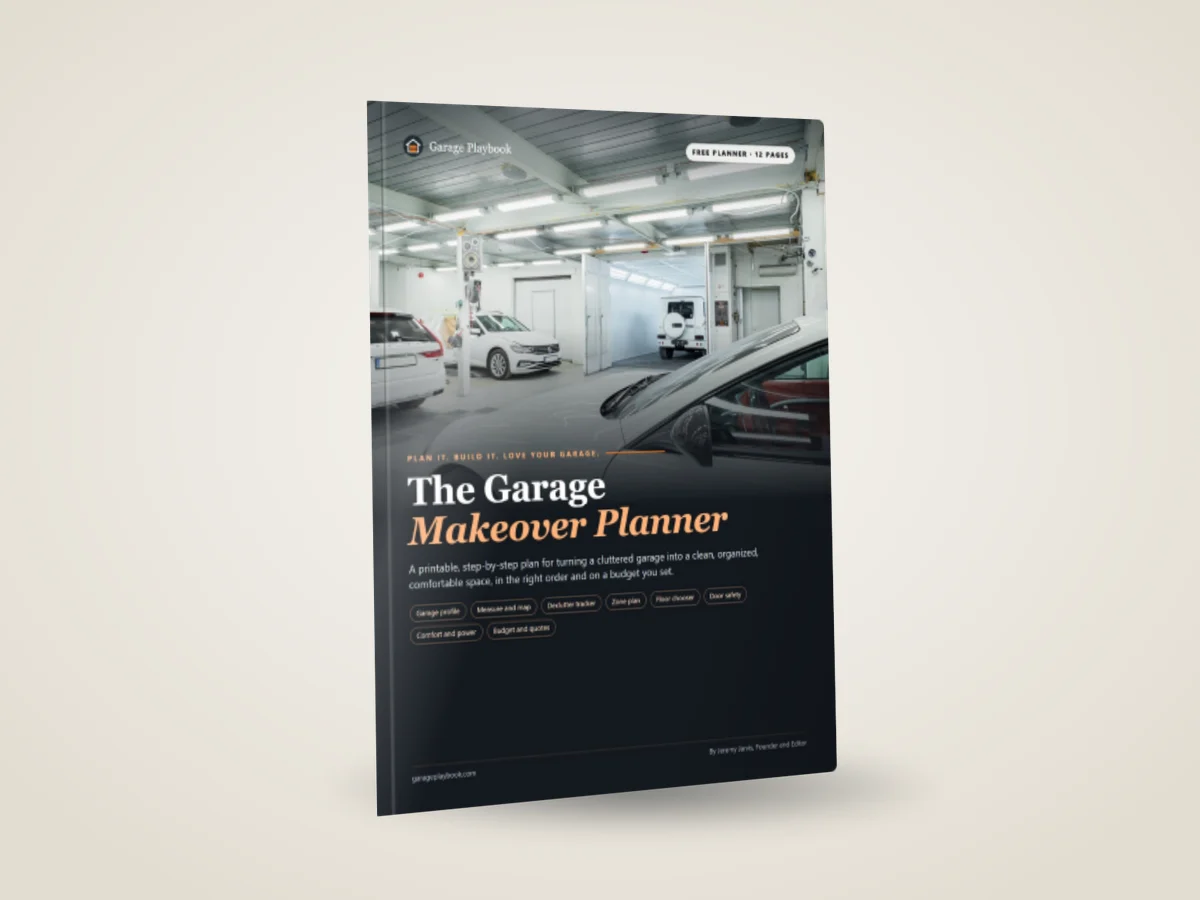
Free download: The Garage Makeover Planner
Our 12-page printable planner: garage profile, measurements and layout grid, declutter tracker, zone plan, floor chooser, door safety checks, budget worksheet and order of work.
The critical figure is how much CFM a compressor can deliver at the pressure your tools need. Compressor makers list delivered CFM at specific pressures, and the figure at 90 PSI is the one to compare with your tools. Notably, horsepower and tank size are not substitutes for this number. Two compressors with similar horsepower can deliver very different airflow.
Sizing your compressor
To size an air compressor for garage tools, first find the CFM at 90 PSI for each tool. Next, mark which tools run at the same time. In most home garages, that is one tool at a time, but some owners run a sander while a helper uses a blow gun. Then add the CFM of tools that run together, and compare the total with the compressor’s delivered CFM.
Build in a margin, especially for continuous-use tools. A compressor running at its absolute limit runs hot and constantly. The Air Compressor CFM Calculator lets you list your tools, mark which run together and see the delivered airflow you need.

Tank size and what it really does
The tank stores compressed air. A larger tank means the compressor can supply a burst of air for longer before the motor restarts, and it cycles less often. That suits tools used in short bursts, such as impact wrenches and nailers.
However, the tank does not change the pump’s sustained output. If a sander needs more CFM than the pump delivers, a bigger tank only delays the moment you run out of air. Therefore, choose the pump’s delivered CFM first, then pick a tank that fits your usage and space.
Duty cycle
Duty cycle describes how long a compressor can run within a period before it needs to rest. Many small compressors are designed to run only part of the time. Heavier stationary compressors are built for longer run times.
If you plan long sanding or painting sessions, check the duty cycle as well as CFM. A compressor that meets your CFM on paper but cannot run that long without overheating will interrupt your work. In addition, a compressor running near its limit for long periods wears faster.
Compressor styles
An air compressor for garage use comes in several styles, each suited to different users.
| Style | Strengths | Best for |
|---|---|---|
| Pancake | Compact, stable, portable | Inflating, nailers, light DIY |
| Hot dog | Slim and portable | Trim work and small tools |
| Twin stack | More stored air, still portable | Framing, more frequent bursts |
| Wheelbarrow or portable wheeled | Larger capacity, rolls on wheels | Jobsites and bigger tasks |
| Vertical stationary | High airflow, large tank, small footprint | Workshops running continuous tools |
For inflating tires and running nailers, a portable unit is often enough. For impact tools, sanders and painting, a larger stationary garage air compressor is usually the better long-term choice.
Oil-free vs oil-lubricated
Oil-free compressors need no oil changes and are often lighter, which makes them popular for home use. However, many are louder and may not be designed for long run times. Oil-lubricated compressors usually run quieter and cooler and tend to last longer under heavy use, but they need regular oil checks and changes.
For occasional use, oil-free is convenient. For a workshop that runs air tools often, an oil-lubricated stationary compressor is worth considering.
Power requirements
Small and mid-size compressors usually plug into standard 120-volt outlets, although they may need a circuit without other heavy loads. Large stationary compressors often require a dedicated 240-volt circuit. Check the compressor’s requirements and confirm your panel can support them.
If you need new wiring, a licensed electrician should do the work. HomeGuide notes that some electricians charge $100 to $300 or more per opening for wiring, and it puts the average cost to wire a garage at $1,200 to $5,200 for larger projects. Avoid long extension cords, which can starve the motor of power; use a longer air hose instead.
Noise
Compressors can be very loud, especially oil-free models. OSHA notes that exposure over 85 decibels can damage your hearing, and that if you need to raise your voice to speak to someone 3 feet away, noise levels might be over 85 decibels.
Look for compressors marketed as quiet, and check their decibel ratings. Placing the compressor in a corner, on a rubber pad or behind a partition, and running air lines to where you work, keeps noise away from you. In addition, wear hearing protection when the compressor and air tools run for long periods.
Hoses, fittings and air lines
A good hose and fittings make a big difference. Hose diameter affects airflow: a narrow hose restricts high-demand tools, especially over long lengths. Choose a diameter and length suited to your tools, and use quality couplers that seal well. Leaky fittings waste air and make the compressor cycle more often.
Many workshops run fixed air lines along the wall, with quick-connect outlets near the workbench and the parking bay. That keeps hoses off the floor and puts air where you need it. Use piping materials designed for compressed air, and follow the maker’s instructions.
Moisture and draining the tank
Compressing air squeezes out water, which collects in the tank. If it is not drained, it can rust the tank from the inside and send water into your tools and paint. Drain the tank regularly, often after each use, through the drain valve at the bottom.
For painting and some air tools, add a water separator or filter near the point of use. Desiccant or refrigerated dryers are an option for heavy use. Meanwhile, an inline oiler suits tools that need lubrication, but keep it off lines used for painting.
Safety with compressed air
Compressed air is powerful. Never point an air nozzle at yourself or others, and never use it to clean dust from clothing or skin. OSHA’s workplace rule states that compressed air shall not be used for cleaning purposes except where reduced to less than 30 psi, and then only with effective chip guarding and personal protective equipment. It is a sensible benchmark at home too.
Wear eye protection whenever you use air tools or blow guns. Check the safety relief valve as the maker recommends, and never tamper with it. In addition, release pressure before changing fittings or tools. For dust cleanup, a vacuum is usually safer than blowing debris around; see our shop vac guide.
Placement in the garage
Every air compressor for garage use needs ventilation, since it produces heat. Leave space around the unit for airflow, and keep it away from dust sources such as saws and sanders, which clog the intake filter. A level, solid floor or a rubber pad reduces vibration and noise.
Stationary compressors should be secured as the maker directs. Place the unit where you can reach the drain valve easily, since a hard-to-reach drain gets skipped.
Maintenance
Drain the tank regularly, check and clean the intake filter, and inspect hoses and fittings for leaks. For oil-lubricated models, check the oil level and change it on schedule. Listen for new noises or longer run times, which can signal leaks or wear.
An air compressor for garage hobbies vs a full workshop
Your plans for the garage shape the right choice. If you mainly inflate tires, sports balls and pool toys, and occasionally drive a few brad nails, a small portable air compressor for garage use is enough. It stores easily, plugs into any outlet and costs relatively little.
On the other hand, if you rotate tires with an impact wrench, sand body panels or spray paint, you need far more sustained airflow. In that case, a larger stationary garage air compressor with a high delivered CFM at 90 PSI and a generous duty cycle is the better investment. Buying a small unit first and upgrading later often costs more overall, so think a few years ahead.
Many owners end up with both: a small portable unit for quick jobs and travel, and a stationary air compressor for garage workshop tools. That way, the big unit stays plumbed into the air lines while the small one goes wherever it is needed.
Garage air compressor checklist
- List your tools and find each one’s CFM at 90 PSI.
- Add tools that run together and include a margin.
- Check duty cycle for long sanding or painting sessions.
- Choose tank size and style for your space and usage.
- Confirm voltage and circuit needs with an electrician.
- Plan hoses, fittings and air lines; add a water separator.
- Drain the tank, protect your hearing and eyes, and keep cleaning air under 30 psi.
Where to compare garage air compressors
When you know the CFM and power you need, compare current quiet garage air compressors, air hose reels and water separators. Check delivered CFM at 90 PSI, duty cycle and noise on each listing. For more workshop guides, visit the Workshop and Tools hub.
Frequently asked questions about garage air compressors
What size air compressor do I need for my garage?
Start with your most demanding air tool and any tools you run at the same time. Add their CFM ratings at 90 PSI from the manuals, then choose a compressor that delivers more than that total. The Air Compressor CFM Calculator does this math for you.
How much CFM do I need for air tools?
It varies widely. Tire inflators and brad nailers use little air, while sanders, grinders and paint guns that run continuously use much more. Check each tool’s rating at 90 PSI in its manual rather than relying on general charts.
Is a bigger tank better on an air compressor?
A bigger tank stores more air, which helps with short bursts and reduces how often the motor cycles. However, it does not increase the compressor’s sustained airflow, so a tool that needs more CFM than the pump delivers will still run out of air.
Do I need 240 volts for an air compressor?
Small and medium compressors usually run on standard 120-volt outlets, while large stationary units often need a dedicated 240-volt circuit. HomeGuide notes some electricians charge $100 to $300 or more per opening for new wiring.
Can I use compressed air to blow off dust?
Use caution. OSHA’s workplace rule says compressed air shall not be used for cleaning except where reduced to less than 30 psi, and then only with effective chip guarding and personal protective equipment. Never point air at skin or other people.
Sources and how we researched this guide
This guide is research-based. We did not test compressors for this article; we compared common designs and specifications, used OSHA guidance on compressed air for cleaning and on noise, and used HomeGuide’s garage wiring cost data. Our calculator totals the CFM at 90 PSI listed in your own tool manuals. Found something out of date? Tell us and we will check it against the source.
- OSHA 29 CFR 1910.242: Hand and portable powered tools
- OSHA: Occupational noise exposure
- HomeGuide: Cost to run electricity to a garage or shop
Keep planning
- Standard Garage Door Sizes: Single, Double and How to Measure
- Shop Vac Guide: Sizes, Filters, Wet Pickup and Dust Control
- Rolling Tool Box: Chests, Carts and How to Choose One
- Garage Workshop Ideas: Layouts, Power, Light and Safety
Go deeper: Tools directory · Garage Makeover Plan Builder

Written by Jeremy Jarvis
Jeremy Jarvis is the founder and editor of Garage Playbook, where he builds research-based guides and free planning tools for garage doors, floors, storage, heating and cooling, and workshops. He sets the site's editorial standards, checks every guide against official sources such as federal safety standards, EPA and OSHA guidance and manufacturer documentation, and is responsible for corrections. Jeremy also founded Eco Nomad Travel, Mind Clarity Hub, SilkHarborTravel, WanderOza Travel, Freedom Road Living and PowerProof Home, and he is the author of books on clarity, focus and practical AI, including The Power of Clarity and Digital Clarity.