
Garage Bike Rack: Wall, Ceiling and Floor Storage Compared
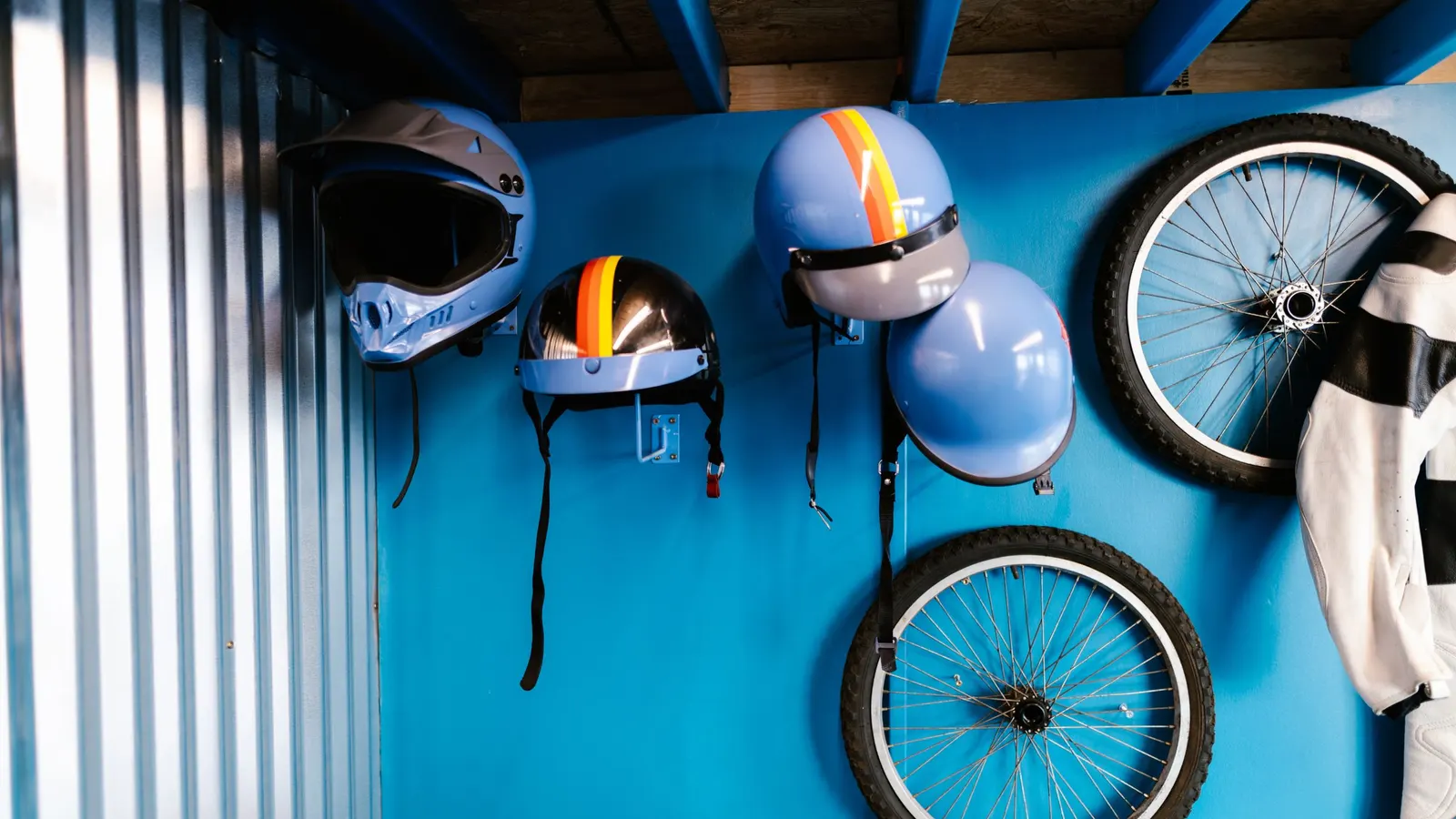
A garage bike rack is one of the quickest ways to reclaim floor space. Bikes are awkward to store. They lean, tip over, scratch cars and tangle with each other. Hung on a wall, lifted to the ceiling or parked in a stand, they stay out of the way and in better condition.
Last reviewed and updated: October 2, 2026. Written by Jeremy Jarvis.
Key takeaways
- A garage bike rack gets bikes off the floor, protects them from knocks and frees parking space.
- Vertical wall hooks save the most space; horizontal mounts and floor stands are easier for heavy bikes and kids.
- Ceiling hoists use dead space above the car but need clear height for the door and vehicles.
- Mount racks into studs or joists, respect weight limits and follow the maker’s guidance for e-bikes.
This guide compares the main types of garage bike rack, from wall hooks to ceiling hoists and floor stands. It covers spacing, mounting, e-bikes, kids’ bikes and how to keep bikes in good shape. For wider storage planning, see our garage organization ideas.
Why a garage bike rack is worth it
In reality, a single bike on the floor takes more space than you might expect, and a family’s worth of bikes can fill half a parking bay. Bikes leaning against walls or each other also fall over, scratch paint and bend parts. A rack solves all of that.
Racks also make bikes easier to use, which is a bonus. When each bike has its own spot, it is quick to grab one and go, and just as quick to put it back. As a result, bikes get ridden more and the garage stays tidier. In addition, getting bikes off the floor keeps tires and components away from puddles, snowmelt and road salt tracked in by cars.
Types of garage bike rack
In general, there are five main approaches to garage bike storage. Each suits different bikes, riders and spaces.

Free download: The Garage Makeover Planner
Our 12-page printable planner: garage profile, measurements and layout grid, declutter tracker, zone plan, floor chooser, door safety checks, budget worksheet and order of work.
| Rack type | Space use | Ease of use | Best for |
|---|---|---|---|
| Vertical wall hook | Very efficient | Requires lifting the front wheel | Adults, lighter bikes, many bikes |
| Horizontal wall mount | Moderate | Lift the whole bike onto arms | Display, road and mountain bikes |
| Ceiling hoist | Uses dead space | Pull a rope or crank | Occasional-use bikes |
| Floor stand | Uses floor space | Roll in and out | Kids’ bikes, e-bikes, daily riders |
| Freestanding gravity rack | Leans against the wall, no drilling | Lift onto arms | Renters, two to four bikes |
In practice, most families mix types. For example, adults’ bikes go on vertical hooks, kids’ bikes in a floor stand and a rarely used tandem on a ceiling hoist.
Vertical wall hooks
Of all the options, vertical hooks are the most space-efficient garage bike rack. Each bike hangs by its front wheel, so it sticks out from the wall about the length of the bike rather than its width. A row of vertical hooks can store several bikes on a short stretch of wall.
The trade-off, however, is lifting. You need to raise the front wheel onto the hook, which is easy for adults with lighter bikes but harder for children and heavy bikes. Swivel hooks help by letting bikes fold flatter against the wall. Meanwhile, a small tray or wheel stop on the floor keeps the rear tire from marking the wall.
Also choose hooks with a protective coating to avoid scratching rims. If you ride carbon wheels or have special components, check the bike maker’s guidance on hanging storage.
Horizontal wall mounts
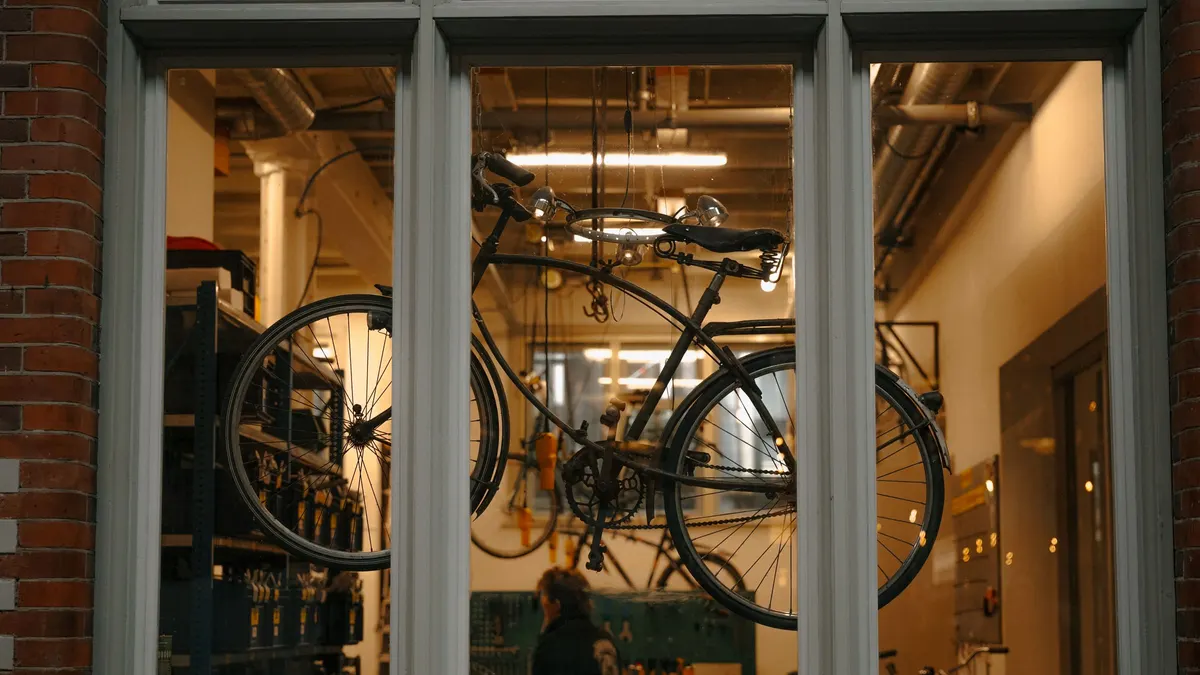
By contrast, horizontal mounts hold the bike by its top tube or frame on two padded arms. The bike sits parallel to the wall, so it takes more wall length but sticks out less. Many people use horizontal mounts to display a favorite bike.
For example, they work well for road and mountain bikes with straight top tubes. However, step-through frames and some full-suspension bikes may need adapter bars or a different style of mount. Lifting the whole bike is also harder than hooking a wheel, so mount the arms at a comfortable height.
Ceiling hoists and hooks
Alternatively, ceiling hoists use pulleys and ropes to lift a bike up to the ceiling, where it hangs out of the way. They are ideal for bikes you ride only occasionally, and they use space that is otherwise wasted. Simple ceiling hooks also work, although lifting a bike overhead onto them is awkward.
For hoists, clearance is critical. The bike must clear the open garage door, the opener rail and the roofs of your vehicles. Tall SUVs and trucks with roof racks can reach surprisingly high. Our overhead garage storage guide explains how to check clearance, and the Overhead Storage Clearance Calculator does the math.
Mount hoists into ceiling joists with the specified hardware, and use the rope lock or cleat so the bike cannot drop.
Floor stands and freestanding racks
Floor stands, on the other hand, hold bikes upright by the wheel. They take more floor space than wall racks, but they are the easiest option to use. Kids can roll their bikes in and out without lifting, and heavy bikes never leave the ground.
Freestanding gravity racks lean against the wall and hold two to four bikes on arms without drilling. They suit renters and people who may rearrange the garage often. On the other hand, they still need floor space and should be placed where cars will not bump them.
Choosing a rack for your household
First, start with who rides and how often. Daily riders want quick access, so floor stands or low hooks near the door make sense. Weekend riders can use higher hooks or hoists. Children need storage they can reach themselves, or they will leave bikes on the floor.
Then consider the bikes themselves. Lightweight road bikes are easy to hang anywhere. Heavy mountain bikes, cargo bikes and e-bikes are harder to lift, so lower mounts or floor stands are safer. Finally, count the bikes you have now and leave room for the next one, since families often add bikes over time.
Spacing and layout
Typically, handlebars are the widest part of most bikes, and they decide how closely you can hang them. Staggering bikes at slightly different heights lets handlebars overlap, which fits more bikes on a wall. Before drilling, hang one bike, then hold the next in place to check clearance.
Plan where the rack sits relative to the cars and doors. Bikes should not stick out into the path of a car door or the area where people walk. In a narrow garage, every inch matters. HomeGuide notes that a 14 by 22 foot one-car garage, which it calls the sweet spot for most homeowners, still leaves only 2 to 3 feet along the sides and back for shelving, tools or a small workbench. The Garage Parking Fit Checker shows how much room your vehicles leave for storage like this.
Mounting a bike rack safely
Remember that a loaded bike rack puts real force on its fasteners, especially when you lift a bike on or off. Mount wall hooks and rails into studs, and ceiling hooks and hoists into joists. Use a stud finder, drill pilot holes and use the screws the maker supplies or specifies.
Avoid drywall anchors for bike storage. Even strong anchors can loosen with repeated loading. On concrete or block walls, use anchors rated for masonry. If you use a rail system, check that both the rail and the bike hooks are rated for the weight. Our garage wall storage guide covers rail systems in detail.
Storing e-bikes
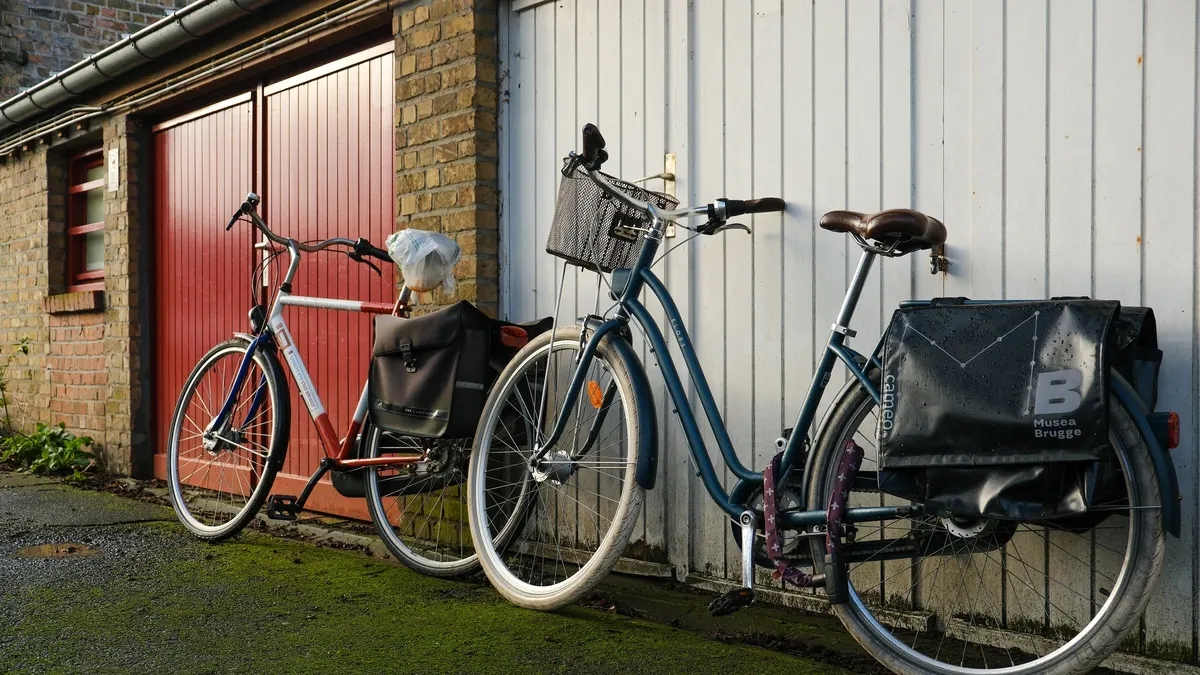
Naturally, e-bikes are much heavier than standard bikes, which changes the storage choice. Lifting one onto a high hook is difficult and risky. Floor stands, low heavy-duty wall mounts or racks designed for e-bikes are usually a better fit.
Batteries need attention too, of course. Follow the e-bike maker’s guidance on where and how to charge and store the battery, including temperature limits. Keep the charging area clear of clutter and flammable materials, and use only the charger supplied or approved by the maker. In addition, avoid leaving batteries in very hot or freezing garages for long periods if the maker advises against it.
Keeping bikes in good condition
Garages can be damp, and moisture is hard on chains, cables and bearings. EPA explains that the key to mold control is moisture control, and it suggests keeping indoor humidity below 60 percent, ideally between 30 and 50 percent. Those same conditions help prevent rust on bikes.
Wipe bikes down after wet rides before hanging them, and keep them away from road salt splashed by cars. Check tire pressure before rides, since tires lose air during storage. If a bike will sit for a season, clean and lube the chain first and store it off the ground.
Garage bike storage for kids
Children need garage bike storage they can use on their own. If their bikes hang on high hooks, they will simply leave them on the floor or the driveway. Therefore, give kids a floor stand or a low wall hook near the door, at a height they can manage without help.
Kids grow quickly, so choose storage that adapts. Adjustable floor stands fit a range of wheel sizes, and track systems let you move hooks up as bikes get bigger. In addition, add a hook or basket nearby for helmets, so the helmet and bike are always found together. Finally, teach the routine: bike in the stand, helmet on the hook. Simple garage bike storage that children can follow keeps the floor clear far better than any rule.
Security in the garage
Unfortunately, bikes are a common target for theft from open garages. Keep the garage door closed when you are not in it, and consider a smart opener with open-door alerts. For valuable bikes, add a wall or floor anchor and lock them to it.
Also, keep bikes out of view from the street when the door is open. A rack on a side wall is less visible than one facing the door. Finally, record serial numbers and keep photos of each bike in case you ever need them.
Common garage bike rack mistakes
The most common mistake is mounting hooks into drywall instead of studs or joists. Another is hanging bikes where car doors or bumpers hit them. Also, placing hooks too close together leads to tangled handlebars and scratched frames.
Some households hang every bike high, so children cannot reach theirs and leave them on the floor. Others hoist bikes without checking clearance for the open door or a tall vehicle. Finally, ignoring e-bike weight leads to awkward lifts and strained backs.
Garage bike rack checklist
- Count bikes and note who rides each one and how often.
- Choose wall hooks, horizontal mounts, hoists or stands to match.
- Measure handlebar widths and plan staggered spacing.
- Keep bikes clear of car doors, walkways and the garage door.
- Mount into studs or joists with the specified hardware.
- Use floor stands or low mounts for heavy bikes and e-bikes.
- Follow the maker’s battery storage and charging guidance.
- Wipe bikes dry and keep the garage humidity in check.
Where to compare garage bike racks
When you know the setup you want, compare current vertical bike hooks and racks, bike ceiling hoists and multi-bike floor stands. Check weight limits and mounting hardware on each listing. For more storage ideas, visit the Garage Storage hub.
Frequently asked questions about garage bike racks
What is the best way to store bikes in a garage?
For most families, wall-mounted racks are the best mix of space saving and easy access. Vertical hooks fit the most bikes per wall, horizontal mounts suit heavier bikes, and floor stands suit kids and e-bikes. Ceiling hoists work well for bikes ridden only occasionally.
Is it bad to hang a bike vertically by the wheel?
For most bikes, hanging by the wheel on a padded hook is a common, accepted way to store them. Check your bike maker’s guidance for carbon rims, hydraulic brakes and specialty wheels, and choose hooks with protective coatings.
How far apart should bike hooks be?
Space hooks so handlebars do not clash. Staggering bikes at slightly different heights lets handlebars overlap and fits more bikes on a wall. Measure your widest handlebars and test the spacing before drilling.
How do you store an e-bike in a garage?
E-bikes are heavy, so floor stands or low, heavy-duty wall mounts are usually easier than lifting them onto high hooks. Follow the maker’s guidance on battery storage and charging, and keep the charging area clear of clutter and flammable items.
How much space do bikes take in a garage?
A bike stored flat on the floor takes a lot of room, which matters in garages that are already tight. HomeGuide notes even a comfortable 14 by 22 foot one-car garage leaves only 2 to 3 feet along the sides and back for storage, so hanging bikes vertically helps.
Sources and how we researched this guide
This guide is research-based. We did not install or test bike racks for this article; we compared common rack designs and used HomeGuide’s garage size data and EPA’s moisture and mold guidance. Follow each rack maker’s weight limits and mounting instructions, and your bike or e-bike maker’s storage and charging guidance. Found something out of date? Tell us and we will check it against the source.
Keep planning
- Overhead Garage Storage: Ceiling Racks, Lifts and Clearance
- Garage Wall Storage: Pegboard, Slatwall, Tracks and Cleats
- Garage Shelving: Types, Load Ratings and Layout Ideas
- Garage Organization Ideas: A Zone-by-Zone Plan That Lasts
Go deeper: Storage & Organization hub · Garage Shelving Load Calculator · Overhead Storage Clearance Calculator

Written by Jeremy Jarvis
Jeremy Jarvis is the founder and editor of Garage Playbook, where he builds research-based guides and free planning tools for garage doors, floors, storage, heating and cooling, and workshops. He sets the site's editorial standards, checks every guide against official sources such as federal safety standards, EPA and OSHA guidance and manufacturer documentation, and is responsible for corrections. Jeremy also founded Eco Nomad Travel, Mind Clarity Hub, SilkHarborTravel, WanderOza Travel, Freedom Road Living and PowerProof Home, and he is the author of books on clarity, focus and practical AI, including The Power of Clarity and Digital Clarity.