
Garage Dehumidifier: Sizing, Drainage and Moisture Control
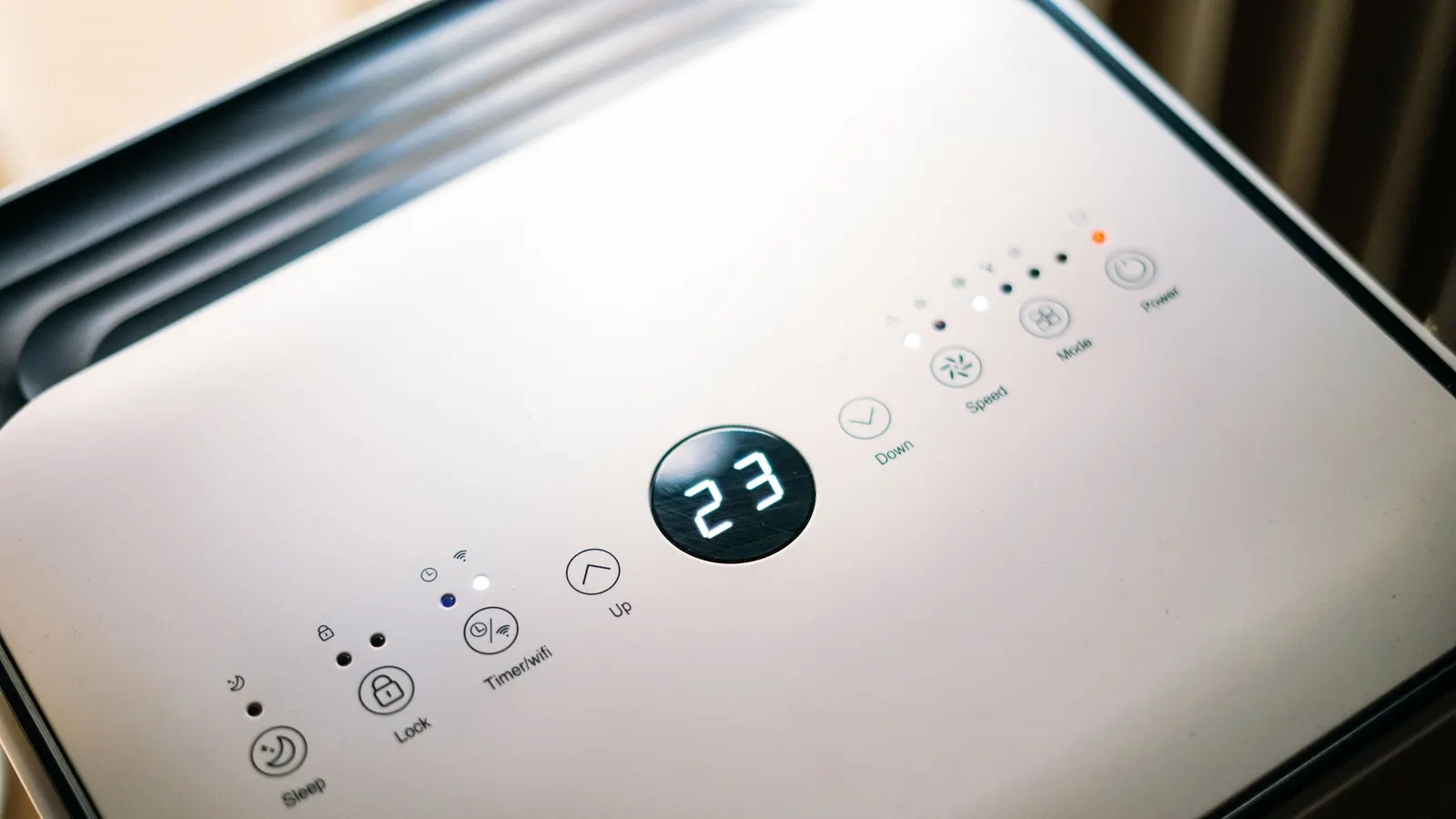
A garage dehumidifier pulls excess moisture out of the air, which protects tools from rust, stops cardboard boxes from sagging and helps keep mold away. Garages get damp for many reasons: wet cars, snowmelt, leaky door seals, unsealed concrete and humid summer air. Choosing the right garage dehumidifier depends on how damp the space is, how cold it gets and where the water will drain.
Last reviewed and updated: October 2, 2026. Written by Jeremy Jarvis.
Key takeaways
- EPA suggests keeping indoor humidity below 60 percent, ideally 30 to 50 percent, to prevent mold.
- ENERGY STAR sizes dehumidifiers by dampness: 20 to 30 pints per day for a slightly to moderately damp space under 2,000 square feet.
- ENERGY STAR certified dehumidifiers remove the same moisture as similar conventional units with 20% less energy.
- Fix leaks, drainage and door seals first; a dehumidifier handles what remains.
This guide explains how to tell whether your garage is too damp, how to size a dehumidifier using ENERGY STAR guidance, and how to handle drainage, cold weather and placement. It also covers the moisture sources to fix first, so the dehumidifier does not have to fight a losing battle.
Signs your garage is too damp
Moisture problems in a garage are often easy to spot once you know what to look for. Common signs include a musty smell, rust on tools and bikes, sagging or stained cardboard, condensation on windows or metal surfaces, and dark spots on walls or the floor. In addition, paper, fabric and leather goods may feel clammy or grow mildew.
The best way to confirm a problem is to measure it. An inexpensive digital hygrometer shows relative humidity. Leave it in the garage for a few days, checking it at different times. If readings stay high, especially after rain or when cars come in wet, a garage dehumidifier will likely help.
What humidity level to aim for
EPA’s guidance on mold gives a clear target. It explains that the key to mold control is moisture control, and it suggests that, if possible, you keep indoor humidity below 60 percent, ideally between 30 and 50 percent. Mold, EPA notes, will not grow without water or moisture.

Free download: The Garage Makeover Planner
Our 12-page printable planner: garage profile, measurements and layout grid, declutter tracker, zone plan, floor chooser, door safety checks, budget worksheet and order of work.
A garage is not a living room, so you may not need to hit the ideal range every day. Still, keeping humidity under control protects stored items and reduces the chance of mold spreading into the house. Moreover, EPA’s indoor air guidance notes that high temperature and humidity levels can increase concentrations of some pollutants.
Find and fix the moisture sources first
A dehumidifier treats the symptom. Fixing the sources makes it far more effective. Start with the biggest contributors:
- Door seals: worn bottom and side seals let rain and snowmelt blow in.
- Drainage: gutters and driveways that slope toward the garage push water inside.
- Wet cars: snow and rain on vehicles melt and evaporate into the air.
- Concrete: slabs can wick ground moisture, especially without a vapor barrier.
- Leaks: plumbing, water heaters and roof leaks add steady moisture.
- Activities: laundry, washing cars inside and some hobbies add humidity.
EPA advises that when water leaks or spills occur indoors, you should act quickly, and that a moisture problem must be fixed before any mold cleanup can be considered finished. Our garage door weather stripping guide covers the most common entry point for water.

Types of dehumidifier for a garage
Most garage dehumidifiers fall into two groups. Compressor, or refrigerant, dehumidifiers pass air over cold coils, so moisture condenses and drains away. They are the most common and efficient type in warm, humid conditions.
Desiccant dehumidifiers use a moisture-absorbing material instead of cold coils. They tend to work better in cool spaces, which makes them worth considering for unheated garages in cold climates. However, they can use more energy in warm conditions. ENERGY STAR notes that certified models are available for both portable and whole home dehumidifiers.
For most garages, a portable compressor unit is the practical choice. If your garage is cold for much of the year, check the operating temperature range carefully or look at desiccant models.
How to size a garage dehumidifier
ENERGY STAR explains that a dehumidifier’s capacity is usually measured in pints per 24 hours. It sizes units by how damp the space is and how large it is:
| Condition without dehumidification | Relative humidity | Small-medium space (under 2,000 sq ft) | Large space (over 2,000 sq ft) |
|---|---|---|---|
| Slightly to moderately damp: feels damp, musty odor at times | 50-75% | 20-30 pints per day | 30+ pints per day |
| Very damp: damp spots on walls and floors | 75-90% | 25-40 pints per day | 40+ pints per day |
| Wet: walls or floor sweat, or seepage | 90-100% | 30-50 pints per day | 50+ pints per day |
Most garages fall in the small-medium column. Use your hygrometer readings and the signs you see to pick the right row. If cars bring in a lot of snow, or the garage doubles as a laundry area, lean toward the higher end. ENERGY STAR notes high-load conditions such as laundry drying may be present in the wettest category.
Drainage options
A garage dehumidifier can remove a lot of water, and it has to go somewhere. ENERGY STAR notes that most portable dehumidifiers use a removable plastic bucket and warning lights to indicate when the bucket is full and needs to be emptied. In a damp garage, that can mean emptying it often.
Continuous drainage is easier. Many units have a hose connection that lets water drain by gravity to a floor drain or outside. If there is no drain lower than the unit, a model with a built-in pump can push water up and out through a hose. Plan the drain path before you buy, so the hose does not create a trip hazard or drain where it will refreeze.
Dehumidifiers in cold garages
Cold is a common challenge. Compressor dehumidifiers work best in warm air. In a cool garage, their coils can frost over, and their capacity drops. Many units have automatic defrost, but performance still falls in low temperatures.
Check each unit’s rated operating temperature range before buying. If your garage stays cold for months, a desiccant model or modest heating may be needed. Fortunately, cold air holds less moisture, so humidity problems are often worst in spring, summer and autumn, when a standard unit works well.
Energy efficiency
Garage dehumidifiers can run for many hours, so efficiency matters. According to ENERGY STAR, a certified dehumidifier uses more efficient refrigeration coils, compressors and fans to remove the same amount of moisture as a similarly sized conventional unit but uses 20% less energy.
The program also explains that dehumidifier efficiency is measured by its integrated energy factor, in liters of water removed per kilowatt-hour of energy consumed. In general, a higher integrated energy factor means a more efficient dehumidifier. Compare that number when choosing between similar units.

Where to place a dehumidifier
Placement affects performance. Put the unit near the dampest part of the garage, often the corner nearest the door or where cars drip. Leave space around it so air can flow in and out freely, and keep it away from walls and stored boxes.
Keep it out of the parking path, so a car or bike cannot knock it over. Plug it directly into a suitable outlet rather than an extension cord, unless the maker allows one. In addition, set it on a stable, level surface, ideally raised slightly off a wet floor.
Running a garage dehumidifier well
Set the humidistat to your target, such as 50 percent, and let the unit cycle on and off. Close the garage door while it runs, since outdoor air keeps replacing the air you have dried. Clean the filter regularly, because garage dust clogs it quickly and lowers performance.
Check the drain hose and bucket often at first, then settle into a routine. In winter, if the garage is cold and dry, you may be able to turn the unit off and store it.
Dehumidifiers, ventilation and air conditioning
Dehumidifiers work best alongside other tools. Ventilation helps when outdoor air is drier than the garage air, and it clears fumes. However, on humid days, ventilating can bring more moisture in. Our garage ventilation fan guide explains when to run a fan.
Air conditioners also remove moisture as they cool. If you plan to cool the garage in summer, a correctly sized unit may handle much of the humidity. Our garage air conditioner guide covers that option. Finally, insulation reduces condensation on cold surfaces, so see our garage insulation guide too.
Choosing a dehumidifier for garage use
When choosing a dehumidifier for garage use, look beyond the pints-per-day rating. Check the operating temperature range, the drain hose connection, whether a pump is built in, the filter access and the bucket size. A sturdy handle and wheels help if you will move it. Also, look for an auto-restart feature, so the unit resumes after a power outage.
Noise matters less in a garage than in a bedroom, but it still matters if the garage is a workshop or gym. Finally, consider an ENERGY STAR certified model, since the efficiency savings add up when a dehumidifier for garage use runs for hours each day.
Protecting what you store
A garage dehumidifier protects more than the air. Tools, bikes and car parts rust more slowly in drier air. Paper, photos, fabrics and leather resist mildew. Even holiday decorations and sports gear last longer when they are not sitting in damp conditions for months.
Still, pair the dehumidifier with good storage habits. Lift items off the floor, use lidded plastic bins instead of cardboard and leave a small gap behind shelving so air can circulate. In addition, keep a light coat of oil on bare steel tools if your garage is often humid. Together, these steps keep stored items in good shape even during wet seasons.
Common dehumidifier mistakes
The most common mistake is buying a unit that is too small for a very damp garage, so it runs constantly without catching up. Another is running a dehumidifier with the garage door open, which simply dries the outdoors. Also, many owners forget the filter, and a clogged filter quietly cuts performance.
Some people ignore the source of the moisture, such as a leaking gutter or worn door seal, and expect the dehumidifier to fix it. Others run a standard unit in a freezing garage, where it frosts up and does little. Finally, a drain hose routed uphill, kinked or left to freeze can cause leaks, so check the drain path carefully.
Garage dehumidifier checklist
- Measure humidity with a hygrometer for a few days.
- Fix leaks, drainage and door seals first.
- Size the unit with ENERGY STAR’s dampness table.
- Check the operating temperature range for cold garages.
- Plan continuous drainage or choose a model with a pump.
- Pick an ENERGY STAR certified unit for lower running costs.
- Place it in the dampest area with good airflow.
- Clean the filter and check the drain regularly.
Where to compare garage dehumidifiers
When you know the size and drainage you need, compare current ENERGY STAR dehumidifiers with pumps, desiccant dehumidifiers and digital hygrometers. Check capacity, temperature range and drainage on each listing. For more guides, visit the Garage Heating, Cooling and Insulation hub.
Frequently asked questions about garage dehumidifiers
Do I need a dehumidifier in my garage?
You may if the garage smells musty, tools rust, cardboard sags or walls sweat. EPA suggests keeping indoor humidity below 60 percent, ideally between 30 and 50 percent. A cheap hygrometer tells you whether your garage is above that range.
What size dehumidifier do I need for a garage?
ENERGY STAR recommends 20 to 30 pints per day for a slightly to moderately damp space under 2,000 square feet, 25 to 40 pints for a very damp space and 30 to 50 pints for a wet space. Larger spaces need more capacity.
Do dehumidifiers work in cold garages?
Many standard compressor dehumidifiers lose capacity in cool air and can frost up. If your garage gets cold, check the unit’s rated operating temperature range, look for automatic defrost, or consider a desiccant model designed for low temperatures.
Where should a dehumidifier go in a garage?
Place it near the dampest area, with space around it for airflow and close to a floor drain or a place to run a drain hose. Keep it away from where cars park and off wet floors, and plug it directly into a suitable outlet.
Are ENERGY STAR dehumidifiers worth it?
Usually. ENERGY STAR says a certified dehumidifier removes the same amount of moisture as a similarly sized conventional unit but uses 20% less energy. Since garage units may run for many hours, the savings add up.
Sources and how we researched this guide
This guide is research-based. We did not test dehumidifiers for this article; we used ENERGY STAR’s dehumidifier sizing and efficiency guidance and EPA’s guidance on moisture, mold and indoor air. Check each unit’s rated operating temperature range for cold garages. Found something out of date? Tell us and we will check it against the source.
- ENERGY STAR: Dehumidifiers
- EPA: A brief guide to mold, moisture and your home
- EPA: Introduction to indoor air quality
Keep planning
- Garage Insulation: Walls, Ceiling, Door, Costs and R-Values
- How to Insulate a Garage Door: Kits, Steps and Costs
- Garage Ventilation Fan: Types, Sizing and Placement Guide
- Garage Heater Guide: Electric, Gas, Infrared and Sizing
Go deeper: Heating, Cooling & Insulation hub · Garage Heater Size Calculator · Garage Ventilation Calculator

Written by Jeremy Jarvis
Jeremy Jarvis is the founder and editor of Garage Playbook, where he builds research-based guides and free planning tools for garage doors, floors, storage, heating and cooling, and workshops. He sets the site's editorial standards, checks every guide against official sources such as federal safety standards, EPA and OSHA guidance and manufacturer documentation, and is responsible for corrections. Jeremy also founded Eco Nomad Travel, Mind Clarity Hub, SilkHarborTravel, WanderOza Travel, Freedom Road Living and PowerProof Home, and he is the author of books on clarity, focus and practical AI, including The Power of Clarity and Digital Clarity.