
Garage Gym: Space, Flooring, Equipment and Climate Plan
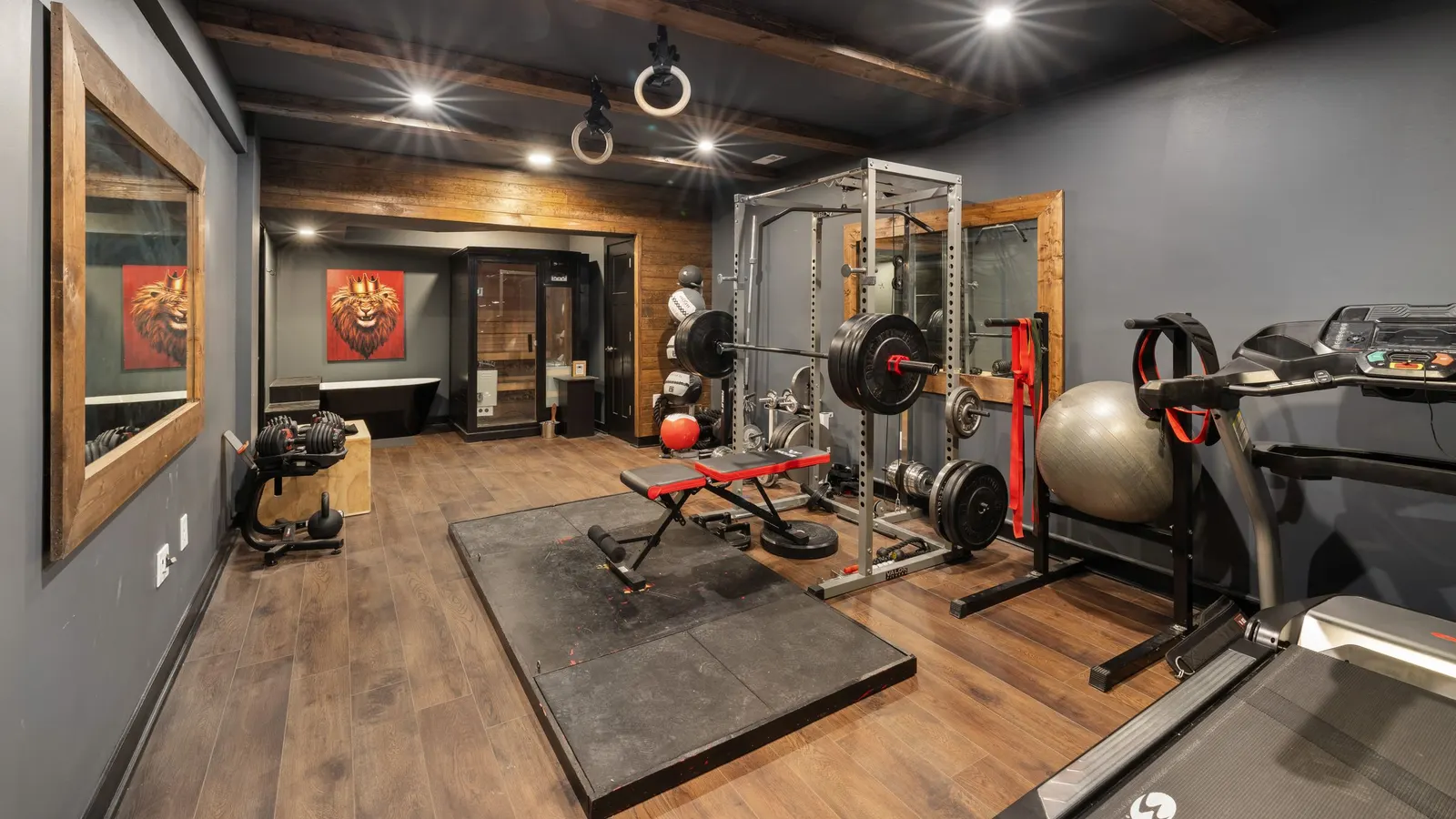
A garage gym puts a full training space a few steps from your kitchen. There is no commute, no waiting for equipment and no membership fee. For many people, converting part or all of the garage into a gym is the most-used home upgrade they ever make.
Last reviewed and updated: October 2, 2026. Written by Jeremy Jarvis.
Key takeaways
- A garage gym starts with your training style; it decides the space, ceiling height and equipment you need.
- HomeGuide puts a home gym at $800 to $5,000 on average, from a $200 to $500 mini gym to $5,000 to $25,000 or more for premium setups.
- Protective rubber flooring guards the slab, your equipment and your joints.
- Control temperature and humidity: EPA suggests keeping humidity below 60 percent to prevent mold, which also slows rust on iron.
This guide covers how to plan a garage gym: space and ceiling height, flooring, equipment, budget, climate, humidity, lighting, storage, sharing space with cars and safety. If you are considering a full conversion to living space instead, see our garage conversion cost guide.
Plan around how you train
Your training style decides almost everything. Barbell training needs a rack, a bar, plates, a bench and a lifting platform. By contrast, functional fitness needs open floor space, kettlebells, rings and perhaps a rower. Meanwhile, cardio-focused training needs room for a treadmill, bike or rower, and good ventilation.
Write down the movements you do most. Then list the equipment they require and the space each piece needs, including room to load plates and move safely around it. This list keeps you from buying equipment that does not fit or does not suit your routine.
Space and ceiling height
Floor space is the first constraint. A power rack, bench and plate storage take up more room than they appear to, especially once you add space to load the bar from both ends. Measure the garage and mark each piece of equipment on the floor with tape before buying.

Free download: The Garage Makeover Planner
Our 12-page printable planner: garage profile, measurements and layout grid, declutter tracker, zone plan, floor chooser, door safety checks, budget worksheet and order of work.
Ceiling height is the second, and it is often the deciding factor. Overhead presses, pull-ups, box jumps and jumping rope all need clearance. Garage door tracks and the opener rail may sit lower than the ceiling itself. Therefore, measure the lowest point where you plan to train, and check racks and rigs against it. Some racks come in shorter heights for low garages.
Garage gym flooring
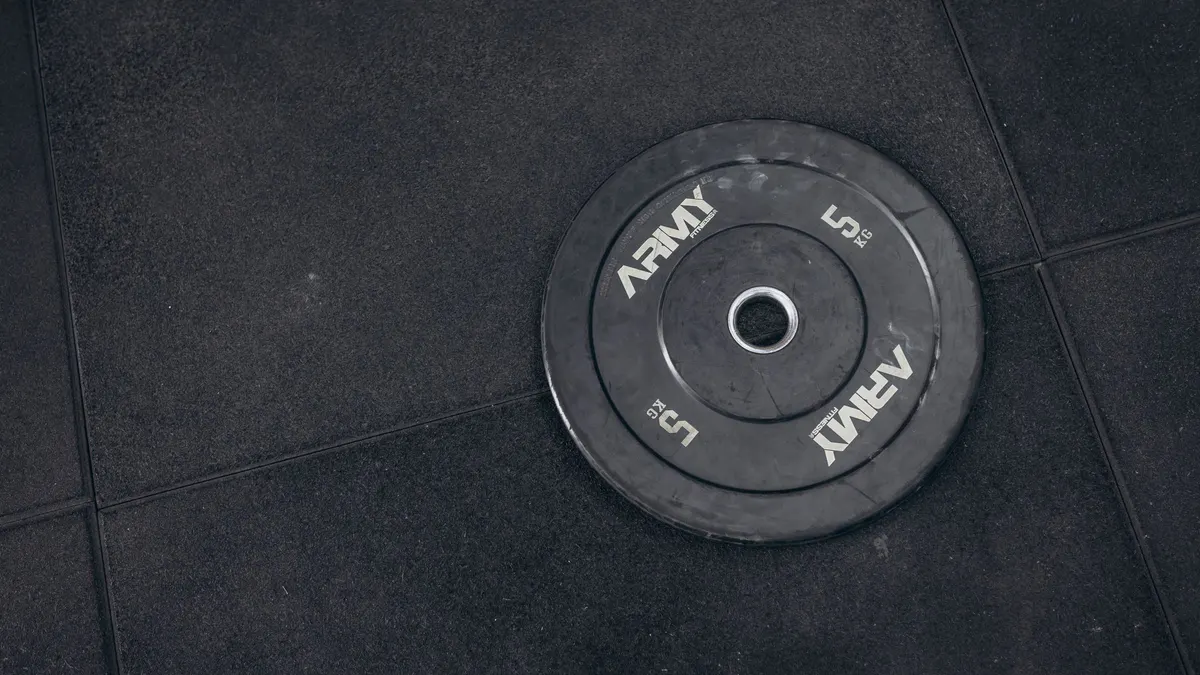
Bare concrete is hard on equipment, joints and the slab itself. Dropped dumbbells can chip the concrete, while plates can crack. Rubber flooring solves those problems. Thick rubber mats or interlocking rubber tiles absorb impact, reduce noise and give a stable, grippy surface.
Use the thickest flooring where you lift heaviest, often a dedicated platform under the rack. Elsewhere, thinner mats or tiles are fine. Our garage floor mats guide compares gym mats with other garage flooring. In addition, lift mats occasionally to let the slab dry, since moisture can collect beneath them.
Essential equipment
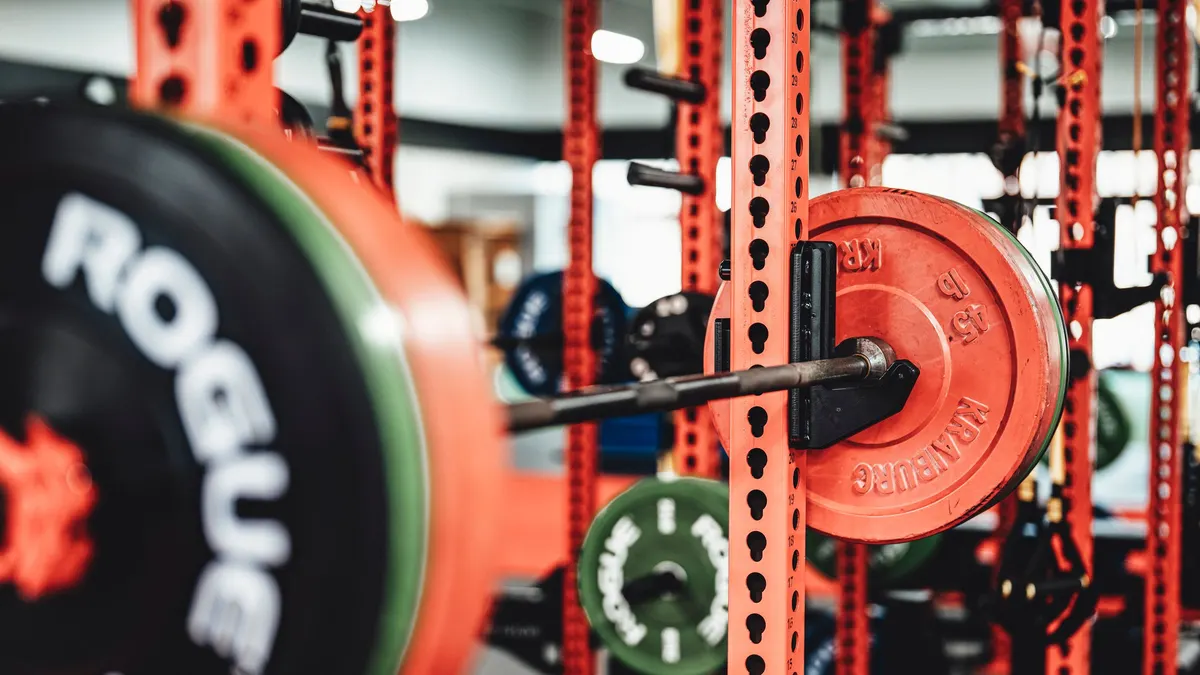
Start with the essentials for your training, then add pieces over time. For a barbell-focused garage gym, the core is a power rack or squat stands with safety arms, an Olympic bar, bumper or iron plates, and a sturdy adjustable bench. Dumbbells or adjustable dumbbells, a pull-up bar and a few kettlebells add a lot of variety.
For cardio, a rower, bike or treadmill is common; check the footprint and ceiling clearance for treadmills. Smaller items such as bands, a jump rope, a mat and a foam roller cost little and take up little space. Above all, buy quality where safety matters, such as the rack, the bar and the bench.
Garage gym budget
HomeGuide’s home gym cost data offers a helpful way to think about budget:
| Gym type | Typical cost (HomeGuide) | What it usually includes |
|---|---|---|
| Small or mini gym | $200 – $500 | Bands, yoga mat, jump rope, dumbbells or kettlebells |
| Basic home gym | $800 – $1,500 | A broader range of equipment than a mini gym |
| All-in-one gym system | $1,000 – $5,000 | A single multi-station machine |
| Premium home gym | $5,000 – $25,000+ | A complete setup of high-end equipment |
HomeGuide puts the average home gym at $800 to $5,000. If you are also finishing the garage, its garage conversion data lists a home gym conversion at $2,000 to $9,000. Flooring, climate control and lighting are worth budgeting alongside equipment, since they decide how often you will actually train.
Climate: training in heat and cold
Garages are hot in summer and cold in winter. Extreme temperatures make training uncomfortable and can even be unsafe. Insulation is the foundation: insulating the garage door, walls and ceiling makes any heating or cooling far more effective.
For winter, a properly sized heater or a ductless mini split heat pump works well. Keep anything that can burn away from heaters, and never use unvented fuel heaters in a closed garage. For summer, a fan, a window unit or a mini split helps. Our garage heater guide compares heating options in detail.
Humidity and rust
Humidity is the hidden enemy of a garage gym. Iron plates, bars and racks rust in damp air, and sweat makes it worse. EPA suggests keeping indoor humidity below 60 percent, ideally between 30 and 50 percent, to prevent mold; that range also slows rust.
A dehumidifier is often the answer. ENERGY STAR notes that a certified dehumidifier removes the same amount of moisture as a similarly sized conventional unit but uses 20% less energy, and it sizes units by how damp the space is. Our garage dehumidifier guide explains sizing. In addition, wipe down bars and plates after sweaty sessions, and store bars horizontally or vertically on racks rather than on the floor.
Ventilation and air quality
Hard workouts mean heavy breathing, so air quality matters. NIEHS notes that the Environmental Protection Agency estimates Americans are indoors 90% of their time. It also notes that studies suggest indoor concentrations of air pollutants are increasing, driven by factors such as inadequate ventilation, hotter temperatures and higher humidity.
In a garage gym, that means removing stored fuel, solvents and chemicals from the training area, never running engines inside and ventilating while you train. A fan that exhausts air outdoors, or simply opening the door on mild days, keeps the air fresher. Our garage ventilation fan guide explains options.
Lighting and mirrors
Good lighting makes the gym safer and more inviting. Spread several LED fixtures across the ceiling for even light, so you can see your form and avoid tripping over plates. Choose fixtures that will not glare into your eyes when you lie on a bench or look up during presses. Our garage lighting guide covers layout and color.
Mirrors help with form, and they make a garage feel larger. Mount them securely, away from where bars and plates might strike them, and consider shatter-resistant options.
Storage keeps it safe
Loose plates, dumbbells and bands are trip hazards. Plate trees, dumbbell racks, wall-mounted bar holders and hooks for bands keep equipment off the floor. Storing plates on the rack itself saves space. Meanwhile, a small shelf holds chalk, belts, timers and a speaker.
Good storage also makes sharing the garage easier. When everything has a home, the space can be tidied quickly before a car comes back in.
Sharing the garage with a car
Many garage gyms share space with parking. Wall-mounted folding racks fold flat against the wall when not in use. Rolling benches and storage carts tuck away. A dedicated bay for the gym in a two-car garage is the simplest arrangement.
Plan the layout so the lifting area stays clear of the car, and keep a mat or platform where the car will not drive over it. Also, let a hot car cool outside before parking it in a garage you plan to train in soon, and never warm up a car inside.
Safety first
Training alone at home means you need built-in safety. Use a rack with properly set safety arms or straps for squats and presses, so you can fail a lift safely. Anchor racks and rigs to the floor or wall as the maker directs. Keep the area around the bar clear of plates, bands and kettlebells.
Keep a phone within reach, and tell someone when you train alone. Finally, check equipment regularly for loose bolts, worn cables and cracked collars.
Making the space motivating
A garage gym you enjoy is a garage gym you use. Small touches make a big difference. For example, a good speaker, a clock or interval timer on the wall and a whiteboard for tracking workouts turn a corner of the garage into a real training space. Likewise, painting the walls a light color brightens the room and makes it feel less like storage.
Keep the gym zone visually separate from the rest of the garage. Different flooring, a rug of rubber tiles or a painted line on the slab helps. In addition, hide clutter behind cabinets or curtains, so you are not staring at boxes between sets. These details cost little but help turn training into a habit.
Noise and neighbors
Dropped weights and music carry. Thick rubber flooring and lifting platforms reduce impact noise. Insulating the garage also helps keep sound inside. If you train early or late, consider controlled lowering rather than dropping weights, and keep music at a considerate level.
Setting up a home gym in garage space, step by step
A clear order of work makes a home gym in garage space come together smoothly. First, declutter and decide which part of the garage becomes the gym. Next, deal with the building itself: seal the door, insulate if needed and fix any leaks. Then lay the flooring, since it is far easier to do before heavy equipment arrives.
After that, install lighting and any new outlets, and mount wall storage. Only then bring in the rack, bench and cardio machines, anchoring them as the makers direct. Finally, add climate control, a fan or dehumidifier, mirrors and the small accessories. Following this order means you never have to move a heavy rack to lay mats or run wiring behind it.
Common garage gym mistakes
The most common mistake is buying equipment before measuring the ceiling. A rack that does not fit under the garage door track is a costly return. Another mistake is skipping proper flooring, which leads to chipped concrete and damaged plates.
Many owners also ignore humidity until rust appears on bars and plates. Similarly, training in extreme heat or cold without climate control makes sessions harder and less frequent. Others leave plates and dumbbells on the floor, creating trip hazards. Finally, training heavy alone without safety arms or straps is a risk that is easy to avoid with the right rack setup.
Garage gym checklist
- List your training style and the equipment it needs.
- Measure floor space and the lowest ceiling point.
- Lay protective rubber flooring and a lifting platform.
- Insulate, then add heating, cooling or a mini split.
- Control humidity to prevent rust and mold.
- Light the space evenly and add secure storage.
- Anchor racks and use safety arms when training alone.
Where to compare garage gym gear
When your plan is ready, compare current power racks, rubber gym flooring and folding wall racks. Check dimensions, height and load ratings on each listing. For more project guides, visit the Garage Projects hub.
Frequently asked questions about garage gyms
How much does it cost to build a garage gym?
HomeGuide lists the average home gym at $800 to $5,000. A small gym with essential gear costs $200 to $500, a basic gym $800 to $1,500, an all-in-one system $1,000 to $5,000, and a premium setup $5,000 to $25,000 or more.
What flooring is best for a garage gym?
Thick rubber mats or interlocking rubber tiles are the most common choice. They protect the concrete from dropped weights, protect equipment from the hard slab, reduce noise and give a stable, grippy surface. Use thicker mats or platforms where you lift heavy.
How do you keep a garage gym warm in winter?
Insulate the garage door, walls and ceiling first, then add a properly sized heater or a mini split heat pump. Keep anything that can burn away from heaters, and never use unvented fuel heaters in a closed garage.
How do I stop gym equipment rusting in the garage?
Control humidity. EPA suggests keeping indoor humidity below 60 percent, ideally between 30 and 50 percent. A dehumidifier, good door seals and wiping down bars and plates after sweaty sessions all help prevent rust.
Can you have a garage gym and still park a car?
Yes, with planning. Use a folding rack, wall-mounted storage and rolling equipment, and keep the gym zone along one wall or in one bay. Measure carefully so lifting areas stay clear of the car.
Sources and how we researched this guide
This guide is research-based. We did not build or test a gym for this article; we used HomeGuide’s home gym and garage conversion cost data, ENERGY STAR’s dehumidifier guidance and EPA and NIEHS guidance on moisture and indoor air. Follow equipment makers’ installation and safety instructions, and anchor racks as directed. Found something out of date? Tell us and we will check it against the source.
- HomeGuide: Home gym cost
- EPA: A brief guide to mold, moisture and your home
- ENERGY STAR: Dehumidifiers
- NIEHS: Indoor air quality
- HomeGuide: Garage conversion cost
Keep planning
- Garage Remodel: Costs, Order of Work and Upgrade Ideas
- Garage Door Screen: Types, Costs and How to Choose One
- Garage Conversion Cost: Prices by Room Type and Scope
- Garage Insulation: Walls, Ceiling, Door, Costs and R-Values
Go deeper: Projects & Conversions hub · Garage Makeover Plan Builder · Garage Conversion Budget Planner

Written by Jeremy Jarvis
Jeremy Jarvis is the founder and editor of Garage Playbook, where he builds research-based guides and free planning tools for garage doors, floors, storage, heating and cooling, and workshops. He sets the site's editorial standards, checks every guide against official sources such as federal safety standards, EPA and OSHA guidance and manufacturer documentation, and is responsible for corrections. Jeremy also founded Eco Nomad Travel, Mind Clarity Hub, SilkHarborTravel, WanderOza Travel, Freedom Road Living and PowerProof Home, and he is the author of books on clarity, focus and practical AI, including The Power of Clarity and Digital Clarity.